Learning Strategy & Technical Enablement

Daniel
Wensel

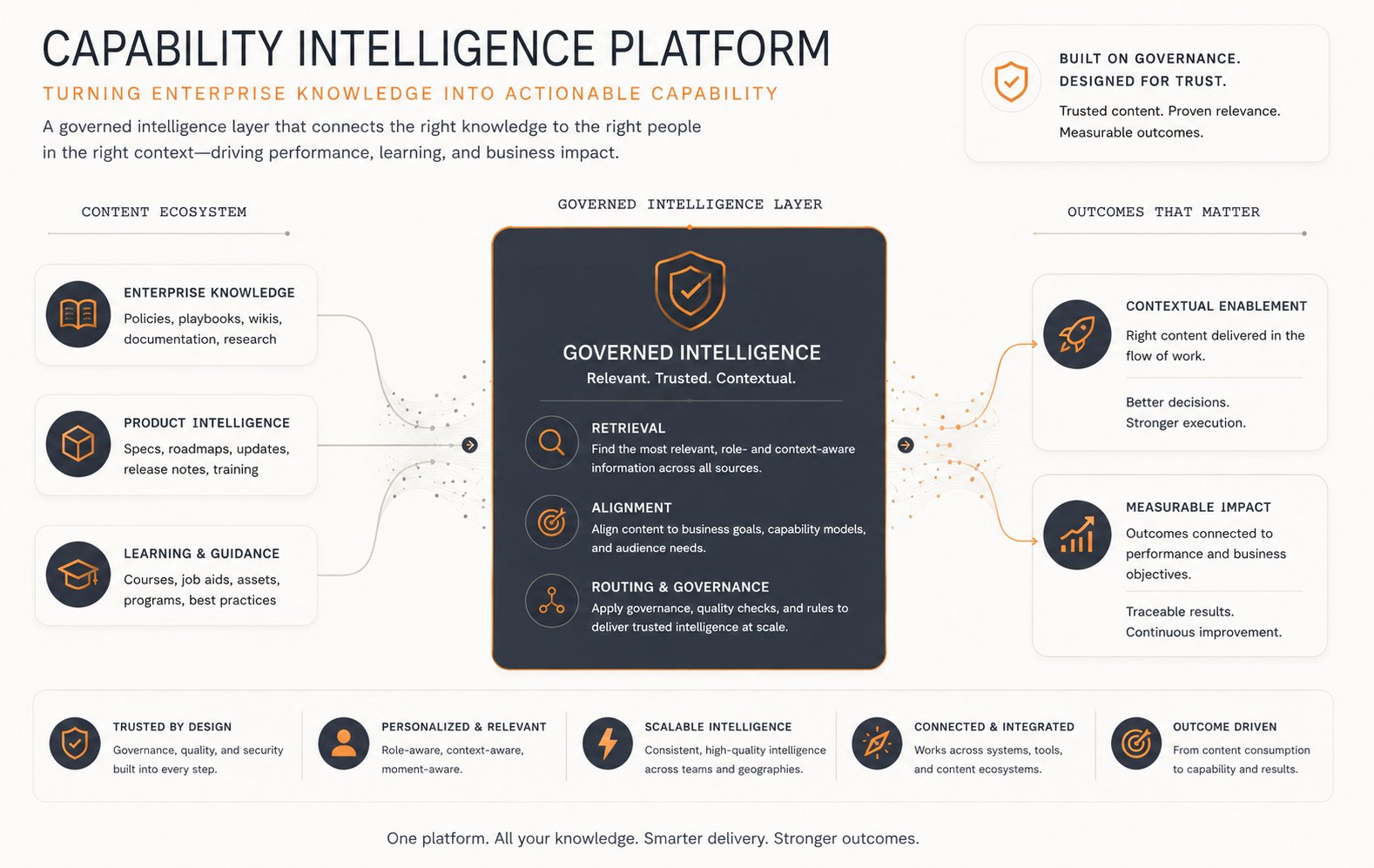
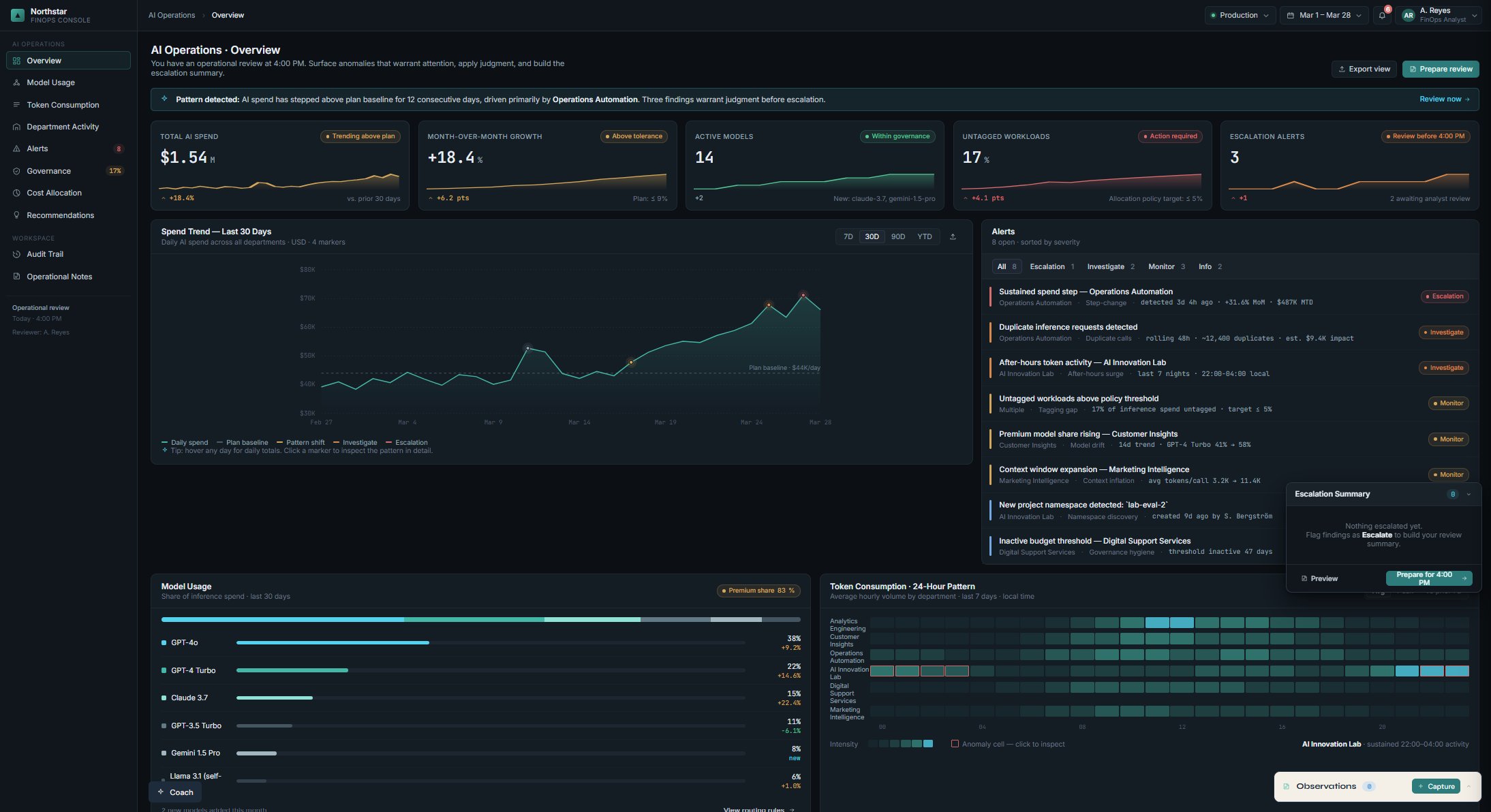
I help organizations build learning capability that scales, built around frameworks designed for reuse, measurement, and the audiences that matter most.

Learning isn't a program.
It's infrastructure, and it should be designed like one.

Experience in
Enterprise SaaS
Aviation
Product Organizations
IT Engineering
Disciplines
Learning Strategy
Architecture
Content Development
Technical Enablement
Deliverables
Custom eLearning
How-to Videos
Instructor-led
In-App Guidance
Curated Pathways
Documentation
Measurement
Kirkpatrick L1-L4
Skill Progression
Confidence & Readiness
01 · Philosophy

How I think
about learning

01

Design for pull. Reserve push for what truly matters.

Motivated learners don't need to be assigned learning. They need to be able to find it. The role of a learning system is to make the right content findable, relevant, and worth seeking out. Push has its place: compliance, critical onboarding, time-sensitive readiness. But it shouldn't be the default. When learners choose to engage, the learning sticks.

02

Products evolve. Good content evolves with them.

The problem a product solves rarely changes. The way it solves it does. Content built for a single delivery moment is obsolete the next release cycle. Design for reuse from the start: modular components that can be refreshed without rebuilding, updated without starting over. The best learning libraries get more valuable over time, not less.

03

Completions measure activity. Capability measures impact.

A completion rate tells you who clicked through. It doesn't tell you who can do the job differently because of what they learned. The right measurement asks harder questions: did confidence shift? Did behavior change? Did the team get better? That's the data worth building programs around.

02 · Work

Selected
projects

Architecture SaaS Ecosystem Design
Learning Ecosystem Design, Verint Systems

Enterprise Learning Ecosystem Architecture

Designed a scalable learning ecosystem serving internal teams, partners, and customers across a SaaS platform. Introduced greenfield and greyfield content structure and a modular reusable content approach that eliminated duplication and laid the foundation for Verint Academy.

40k+
Learners on LMS
3
Audience types served
Transformation Self-directed Learning Measurement
Learning Transformation, Delta Air Lines

Domain-Based Self-Directed Learning Model

Designed and built 13 role-based learning paths in Udemy for Delta IT engineers — replacing a persona-based model that didn't reflect actual skill needs. Led the research process, from interviews with a pilot domain leader and his team, to a scaled survey-based approach using MS Forms to gather skill input from representative managers across 12 additional roles. Curated the Udemy content for each path and designed the learner-choice model that lets engineers explore and personalize their learning based on skill level and interest.

13
Role-based paths
500+
Path enrollments
Case study: Verint learning ecosystem
Enterprise learning ecosystem · Verint Systems
Building the foundation
ILT as the primary product
Classroom and virtual instructor-led training served as the primary content format for internal teams, partners, and customers. The ILT materials established content standards, design patterns, and course structure that informed every format that followed.
Content foundation
Greenfield and greyfield architecture
Designed a content architecture to address two distinct challenges: building net-new learning for new products and features (greenfield), and updating existing content to reflect evolving product functionality (greyfield). Modular, reusable content structure eliminated duplication and established a scalable operating model.
Architecture design
Product documentation leadership
Led product documentation alongside learning development for a period. Technical writers were embedded in scrum teams, working alongside dev teams to create and update documentation in conjunction with product builds. Draft documentation was handed off to instructional designers to begin planning course updates — creating an integrated content pipeline from development to delivery.
Cross-functional integration

Design principle: The greenfield/greyfield framework wasn't inherited — it was designed in response to the real challenge of maintaining a growing product catalog without duplicating effort or losing consistency. That architecture became the operating model for content development across the organization.

Release integration
Learning embedded in the release cycle
Verint's core WFO solution comprised 12 products with multiple development teams releasing new features across varying cycles — 6 to 18 months — and the solution set grew through acquisitions over time. Learning content for all of those products was created, updated, and maintained in sync with product development.
Enterprise scale
Pioneer enablement model
Assessed the complexity and impact of each release to determine when ILT was required. Identified pioneers in Professional Services and Support who would learn new features first — attending ILT sessions and then scaling knowledge transfer to their wider teams.
Internal enablement
Integrated delivery timeline
Scheduled classroom and virtual enablement sessions for all internal Verint audiences as features stabilized. Timed course updates to align with product release — a constant challenge given the narrow window between product-complete and release date.
Release alignment
Capability built into the team
Release enablement started with a dedicated team focused on internal readiness. Over time, development and delivery of enablement content transitioned to the broader instructional design team — distributing the capability rather than keeping it siloed, and building release readiness into the standard operating model.
Organizational design

Complexity at scale: Planning learning for 12+ products across overlapping release cycles, while managing acquisitions and a growing catalog, required systematic processes and tight cross-functional relationships — not just content production.

Video: Searching for product documentation
Designed and scripted by Dan Wensel · Production and narration by team member
Going digital
ILT to digital transformation
Shifted the primary content format from instructor-led training to scalable digital learning. The ILT content library — built over years and refined through delivery — provided the foundation for the digital conversion, preserving the instructional depth while dramatically improving accessibility and scale.
Format transformation
Rapid eLearning conversion
Converted 60 courses to digital in six months in response to COVID-19 — validating the scalability of the digital-first model under real pressure. 15 contributors, standardized templates, and a structured production pipeline made the timeline achievable.
Proof of scale
In-app guidance via Pendo
Evaluated Pendo, WalkMe, and Whatfix before selecting and implementing Pendo. Used in-app walkthroughs and messaging to surface new feature awareness at the moment of use — with Learn More buttons linking directly to relevant Verint Academy content. Experimented with persona-based in-app guidance, though some capabilities were constrained by legacy product architecture.
Digital adoption

Strategic shift: Moving from ILT-first to digital-first wasn't just a format change — it was a fundamental shift in how learning was produced, distributed, and scaled. In-app guidance extended that further, embedding learning into the product experience itself.

Video: WFO eLearning on Verint Connect
Designed and scripted by Dan Wensel · Production and narration by team member
Verint Academy
A branded customer education ecosystem
Verint Academy brought together the full content library — digital learning, ILT materials, onboarding resources, feature adoption content, and product enablement experiences — under a single branded platform delivered through Cornerstone OnDemand. Led the LMS implementation with cross-functional stakeholder involvement across the business.
Platform launch
Three-tier content access
Launched with hundreds of resources in the catalog. All content visible to internal Verint employees. A curated subset available to partners. A separate subset available to customers — each audience accessing the content relevant to their role and relationship with the product.
Content governance
40,000+ learners
The platform served internal teams, global implementation and reseller partners, and customers using Verint's SaaS products and solutions — all through a single, consistently governed learning ecosystem.
Scale achieved
Intentional evolution: from ILT-first to greenfield/greyfield architecture to digital transformation to branded Academy — each phase building on the last.
Embedded in product releases: learning planned and delivered in sync with every product release cycle across 12+ products and multiple development teams.
Three audiences served: internal employees, partners, and customers — each with appropriately scoped access to a catalog of hundreds of resources.
From classroom to in-app: the learning ecosystem evolved from classroom training to digital learning to in-app guidance — meeting learners where the work actually happens.
Video: Verint Academy launch
Designed and scripted by Dan Wensel · Production and narration by team member
Case study: Delta learning transformation
Learning transformation · Delta Air Lines
Before
37 engineering personas
Learning organized around a large set of persona labels, broad, overlapping, and increasingly difficult to maintain as engineering roles evolved.
Role label-driven
Assigned paths, limited agency
Training pushed to personas regardless of actual skill gaps or experience level. Learners had little ability to personalize or explore beyond what was assigned.
Push model
Completion as the metric
Success measured by whether learners finished assigned courses. No signal on relevance, skill progression, or application.
Output-focused
After
13 role-based learning paths
Learning consolidated around job families, focused, maintained, and designed to reflect how engineering work is actually organized at Delta.
Job family-driven
Curated with room to explore
Each path recommends courses by skill, then invites learners to explore additional options by experience level. Structure guides without constraining.
Pull model
Skill progression as the signal
Success tracked through time spent learning and movement across beginner, intermediate, and advanced courses, triangulating progression rather than counting clicks.
Outcome-informed

Strategic framing: Consolidating 37 personas into 13 role-based paths wasn't just a content exercise. It was a deliberate shift in how the organization thinks about learning, from "what role label do you have?" to "what skills does your job family actually require?"

Job family: [Job Family]
[Job Family]: [Role]
01
Role description
A one-sentence description of the role the path is designed for, grounding the learner in context before they engage any content.
02
How to explore and personalize
Guidance on how to navigate the path, including how to browse additional courses by experience level (Beginner, Intermediate, Advanced) beyond the recommended options.
03
Skills with recommended courses
Each skill in the path includes a recommended course plus a prefiltered list of additional options. Learners have a starting point and room to go deeper based on their experience.
04
Feedback survey
Each path ends with a survey designed to capture what completions can't: did skills improve? How confident do learners feel applying them? Were the skills relevant to their role?
13 paths across Delta IT
First launch covered specific roles within IT engineering, with plans to expand the program to cover most Delta IT roles over time.
Phase 1 complete
Learner agency built in
The path recommends, it doesn't mandate. Learners choose courses based on their experience level and can explore beyond the curated set at any point.
Pull by design

Design decision: Embedding "how to explore and personalize" guidance directly into each path was deliberate. It signals to the learner that this isn't another mandatory curriculum. It's a framework they're expected to make their own.

Path enrollment
Aggregate enrollment tracked across all 13 paths, providing signal on which job families are engaging with the program and where adoption is strongest.
Time spent by skill area
Rather than tracking course completions, time spent learning within each skill area is measured, a more meaningful proxy for engagement than a checkbox.
Course level distribution
The mix of beginner, intermediate, and advanced courses being taken across the program is tracked. Combined with time spent, this triangulates skill progression without requiring individual assessment data.
Outcome-oriented feedback survey
Each path ends with a survey designed to capture what completions can't: did skills improve? How confident do learners feel applying them? Were the skills relevant to their role? Were the resources helpful?

Measurement philosophy: This program was designed to move beyond completion tracking from the start. The combination of time spent, course level distribution, and outcome-oriented survey questions creates a richer picture of skill progression than any single metric could.

37 → 13
Engineering personas consolidated into focused role-based learning paths
4
Measurement dimensions: enrollment, time spent, course level, learner feedback
Clearer skill expectations: engineers now have a structured framework that reflects how their role is actually defined, not a broad persona label.
Learner agency preserved: recommended courses provide direction without removing choice. Learners explore based on their own experience level.
Scalable foundation: 13 paths launched across Delta IT, with a clear expansion plan to cover most IT roles over time.
Measurement built in from day one: enrollment, time spent, course level distribution, and outcome-oriented feedback designed into the program before launch.

Early stage, honest framing: This program launched recently. The infrastructure for measuring skill progression is in place and the design intent is clear. As data accumulates, the measurement framework will surface where the program is working and where it needs to evolve.

Technical Enablement Certification Program Design
AWS Certification Program, Delta Air Lines

AWS Certification Program

Designed a qualification-based certification program that removed financial barriers and created structured pathways for engineers to earn AWS credentials. Built the full ecosystem: learning paths, voucher qualification, vendor partnerships, and outcome tracking.

150
Certifications earned
89%
Pass rate
1,200+
Engineers enrolled
Rapid Development Crisis Response Content Development
Rapid eLearning Conversion, Verint Systems

60-Course Rapid eLearning Conversion

When COVID eliminated instructor-led training overnight, led a cross-functional team of 15 to convert 60 customer-facing courses to digital in six months, building the production infrastructure, video pipeline, and quality framework needed to deliver at that pace.

60+
Courses converted
6mo
Brief to delivery
15
Contributors
Case study: AWS certification program
Case study · AWS certification program · Delta Air Lines
2024
Cloud Accelerator Program
Team-led program built with Pluralsight. Four cohorts of 25, with 100 engineers developed foundational AWS cloud fluency. Continued and expanded to 250 participants in 2025.
Role: tracking, reporting, participant support
2024: Pilot
Certification voucher pilot
Vouchers offered to CAP completers on a first come, first served basis. Limited structure, limited support. Demand was clear, but the design wasn't ready to meet it at scale.
Role: tracking, reporting, participant support
2025
Global certification program
Built on what the pilot revealed. Open to all eligible engineers, with no prerequisite program required. Structured, supported, and designed to scale.
Role: program owner, design to execution

Context: The Global Certification Program didn't emerge from nothing. It was shaped by what came before it. The pilot confirmed demand and surfaced gaps in structure and support. This program was the answer to what the pilot revealed.

A widening skill gap
As Delta's IT teams operated increasingly within AWS environments, the gap between day-to-day tool use and validated cloud expertise was growing, quietly but consequentially.
Business need
A real barrier to access
AWS certification exams carry a significant cost. For many engineers, pursuing credentials meant paying out of pocket, or waiting. Motivated learners were being stopped by access, not ambition.
Learner barrier
An untapped opportunity
The conditions were right: a platform relationship with AWS, access to Udemy Business for preparation content, and a team of engineers who wanted to grow. The program didn't create demand. It met it.
Strategic opening

Design philosophy: This wasn't a training initiative handed down from leadership. It was a gap identified, an opportunity recognized, and a program designed to meet learners where they already were: motivated, capable, and looking for support.

Qualify
Structured learning paths in Udemy
Curated certification preparation paths built in Udemy Business, organized by exam track, accessible on demand, at no cost to the learner. Enrollment was the first qualifying step.
Prove readiness
Practice exam gate
To request a voucher, learners had to demonstrate readiness with a passing score on a practice exam. The gate protected voucher investment and ensured learners entered the real exam prepared, not hopeful.
Request
Voucher request via MS Forms
A simple, trackable request form captured practice exam evidence and exam intent. Designed to be frictionless for the learner and auditable for the program.
Earn
Voucher assigned via Pearson VUE
Vouchers assigned individually through the Pearson VUE platform, with exam dates tracked and follow-up built in. Every voucher accounted for, none wasted.

Design decision: The qualification gate was intentional, not as a barrier but as a quality signal. Learners who earned their voucher arrived at the exam more prepared, more confident, and more likely to pass. The 89% pass rate reflects that design choice.

Communications partnership
Collaborated with IT Communications to build awareness and drive enrollment, ensuring the program reached engineers across teams, not just those already plugged into L&D channels.
Internal comms
AWS Skill Builder cohorts
Partnered with the AWS Skill Builder team to create structured cohorts, adding Trivia sessions and instructor-led office hours to reinforce preparation and build community among participants.
Vendor partnership
Outcome tracking
AWS provided exam outcome reports: pass, fail, and no-show, enabling closed-loop tracking of every voucher. Exam scheduling monitored throughout to keep momentum visible.
Data infrastructure
Manager impact survey
Designed, though not yet implemented, a manager survey to assess whether certification translated to observable capability change on the team. The measurement intent was built in from the start.
L3 measurement

Systems thinking: The program wasn't a voucher distribution exercise. It was an ecosystem. Learning paths, qualification gates, communications, vendor partnerships, outcome tracking, and a measurement layer designed to answer the question that matters most: did this make the team better?

150
AWS certifications earned, and counting
1,200+
Engineers enrolled in learning paths
300/300
Vouchers claimed
89%
Certification pass rate
4.93/5
Participant satisfaction · 87 exams still scheduled
"This initiative has directly contributed to my ability to deliver better solutions and stay aligned with industry standards."
Program participant · Delta Air Lines
"This learning experience has significantly boosted my confidence and will help me apply these concepts more efficiently in current and future projects."
Program participant · Delta Air Lines

What the numbers don't show: 1,200 engineers chose to enroll. Nobody was assigned. Every voucher was earned, not handed out. The program created demand by removing barriers, not by mandating participation. That's the design working as intended.

Case study: Rapid eLearning conversion · Verint Systems
Case study · Rapid eLearning conversion · Verint Systems
March 2020
COVID-19 eliminated instructor-led training overnight. Scheduled customer sessions had to be cancelled. The question wasn't whether to convert 60 courses to digital. The question was how fast.
Immediate customer impact
These weren't future training sessions. They were already scheduled. Customers expecting product training needed an alternative fast. Courses were prioritized by delivery demand, not convenience.
Urgent delivery need
60 courses. 6 months.
The scope was fixed. Every ILT course in the catalog needed a digital equivalent. The timeline was non-negotiable. The team had to be assembled, the process formalized, and the work distributed at a pace the team hadn't operated at before.
Fixed scope and timeline
Scale required formalization
The team had produced video content and eLearning before, but informally and at smaller scale. Converting 60 courses in six months meant taking existing practices and turning them into a structured, repeatable production system.
Existing capability, new scale

Leadership context: The VP of Go-to-Market brought the challenge directly. The ask was clear: convert everything, within budget, as fast as possible. What followed was equal parts program design, production engineering, and crisis leadership.

Tool selection
Storyline vs. Rise: an evidence-based decision
Rapid prototypes of the same course were built in both Articulate Storyline and Rise. Internal reviewers from Professional Services evaluated both. Storyline showed a slight preference, but not enough to justify the additional development time at the scale and pace required. Rise was selected.
Consistency
Shared template design
A Rise template was designed before development began, with a structure, consistent visual design, common patterns. The goal: 60 courses that felt like they were built by one person. With 15 contributors, consistency had to be designed in from the start, not managed after the fact.
Replacing live demos
Video production strategy
Every ILT course included instructor-led product demos. In digital format, those had to become recorded video. A structured video capture process was designed covering tools, standards, scheduling, and an editing pipeline, before a single recording was made.
Quality
Structured review cycles
Peer and manager review cycles were built into the production schedule. Speed was never an excuse for skipping quality gates. Every course went through review before delivery.

Design principle: The decisions made before the first course was built determined whether the project would succeed. Tool selection, template design, video production standards, and review cycles were the infrastructure that made speed possible without sacrificing quality.

Cross-functional team
15 contributors total, with 5 to 6 fully dedicated, others supporting where capacity allowed. Instructional designers, technical writers, and trainers working in parallel, coordinated across a shared production schedule.
Team coordination
Video pipeline
A direct report managed all video production with instructors, tracking required demos per course, scheduling recordings, and maintaining a shared asset directory. One team member handled all video editing: callouts, highlights, pan-zoom, consistent finish across every video.
Production infrastructure
Shared asset management
Completed videos were stored in a structured shared directory, accessible to Rise developers when ready to pull them in. Clean handoff built into the workflow. No hunting for files, no version confusion.
Workflow design
Hands-on development
When the deadline required it, development wasn't delegated. Two courses were taken on personally to keep the project on track, a deliberate choice to stay close to the work and support the team under pressure.
Individual contribution

Leadership approach: Managing the program and contributing to it are not mutually exclusive. When the timeline is fixed and the team is at capacity, the right move is to pick up the work, not escalate the problem.

60+
ILT courses converted to digital
6
Months from brief to delivery
15
Contributors across functions
"Dan's innovation and creativity saved my products last year. Our team was faced with a challenge: in one quarter, create end-user eLearning modules for eight products, most from scratch, find a way to host them, and roll them out to customers, all within existing budget. I cannot underscore enough how the work Dan put in here, in the strategy, the creativity and communication, was the reason for the success of a project which had ripple effects across the year in every sale and cloud migration we did. It was honestly the best initiative I worked on at Verint, from conception to execution to finished project."
Siobhan Miller, VP Portfolio Market Strategy, Verint Systems
Customer training continued without interruption despite the loss of all in-person delivery capacity.
Ripple effects across sales and cloud migration throughout the year, per the VP of Go-to-Market.
Production infrastructure formalized under pressure became the foundation for scalable digital content delivery going forward.
Delivered within existing budget with no additional resourcing, by designing for efficiency from the start.
03 · Recognition

What others
have said

"Dan's innovation and creativity saved my products last year. The work had ripple effects across the year in every sale and cloud migration we did. It was honestly the best initiative I worked on at Verint, from conception to execution to finished project."

Siobhan Miller
VP Portfolio Market Strategy, Verint Systems

"Some of the best learning programming our department has seen to date."

Chairman's Club nomination, Delta Air Lines
Hope Conn
IT Senior Communications Coordinator, Delta Air Lines

"Dan is a strategic thinker who understands the importance of aligning learning programs with organizational goals."

Itai Weinberg
Learning and Content Development Manager, Verint Systems

"He would always ask the right questions to assign the right team member based on talent and time commitments."

Becky Chaussinand
Product Mgmt and Program Mgmt, Verint Systems
04 · Work Samples

Courses
I've built

Cloudability 101
Cloud cost management tool training for FinOps cost champions across Delta IT engineering
Internal · Delta Air Lines Articulate Storyline View and Try modes Adobe Creative Cloud
Audience
FinOps cost champions · Delta IT engineering teams operating within AWS environments
Context
Developed in response to a request from the FinOps team to refresh existing training. Obtained direct access to Apptio Cloudability to learn the system firsthand and capture screens for the Show Me and Try Me interactions. The previous version lacked interactivity and visual polish. Redesigned from the ground up around View mode demonstrations and Try mode practice interactions, matching the instructional approach to the nature of the tool.
Tools
Articulate Storyline · Adobe Creative Cloud · SAP SuccessFactors LMS
Learning objectives
  • Navigate the Cloudability dashboard and interface, including key features and tools for tracking and managing cloud costs
  • Analyze cloud spend to identify cost trends and pinpoint areas for potential savings using reporting and visualization tools
  • Apply best practices for optimizing cloud costs, including rightsizing resources
  • Use native budgeting and forecasting tools to predict future cloud costs and usage
Design decisions
The previous version of this course walked learners through the UI slide by slide: functional but passive. The redesign introduced View and Try modes to replace observation with practice. Try Me interactions were intentionally simplified and varied slightly from the demonstrations, ensuring learners had to apply understanding rather than replicate steps from memory. For an audience of cost champions who needed to use the tool independently from day one, recognition was not enough. Performance was the goal.
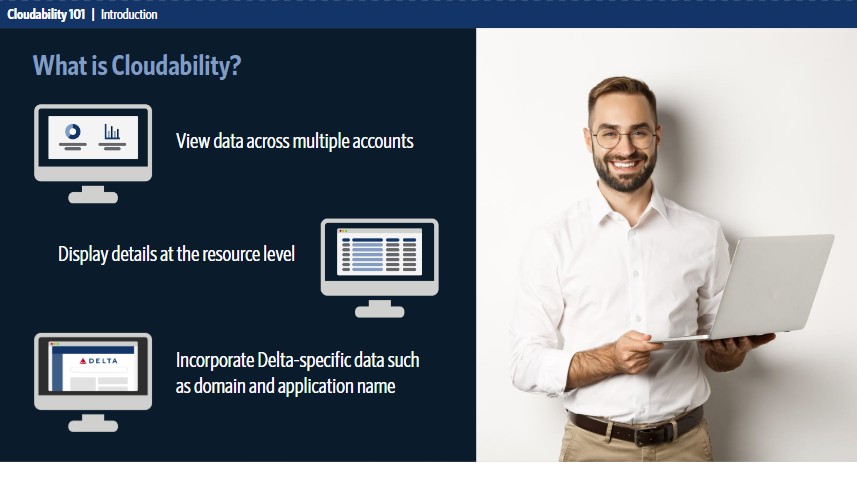
What is Cloudability: course introduction slide showing key capabilities
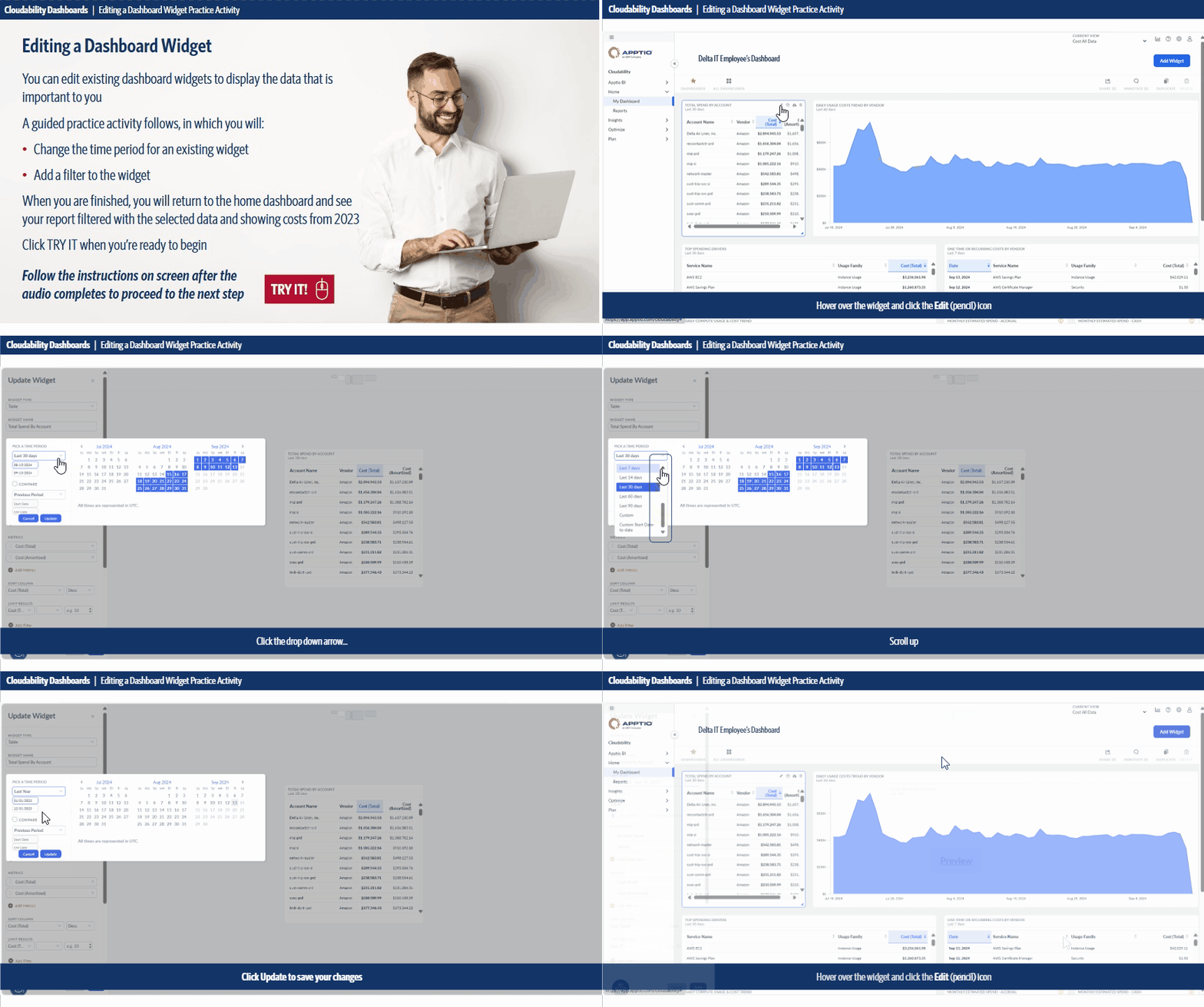
Show Me demonstration: Cloudability Dashboards view mode walkthrough
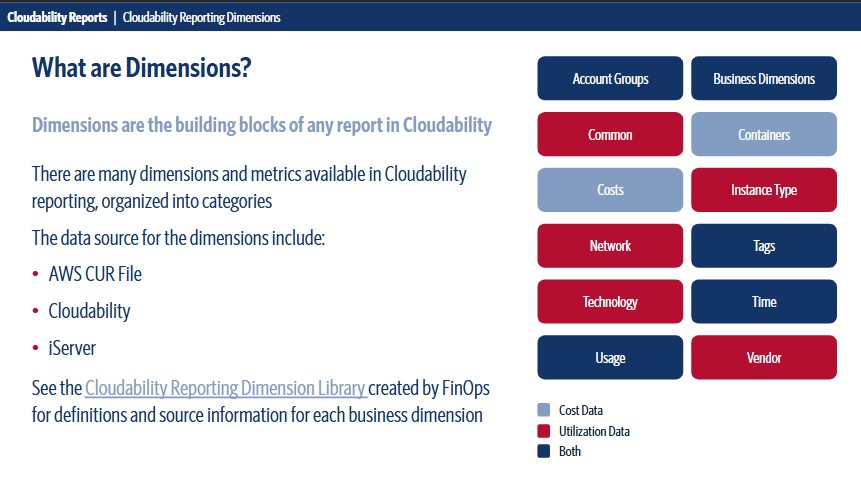
Cloudability Reporting Dimensions slide showing dimension categories
Try It interaction: Viewing Current Month Spend practice activity
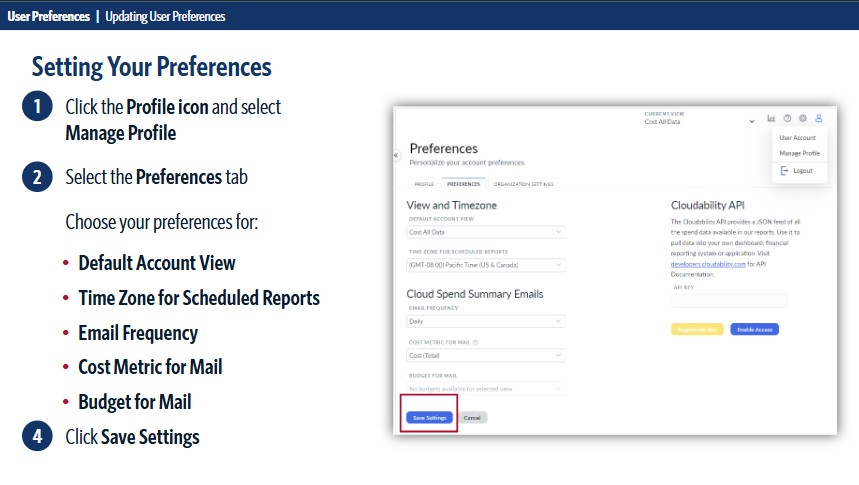
Setting Your Preferences: step by step with Cloudability UI screenshot
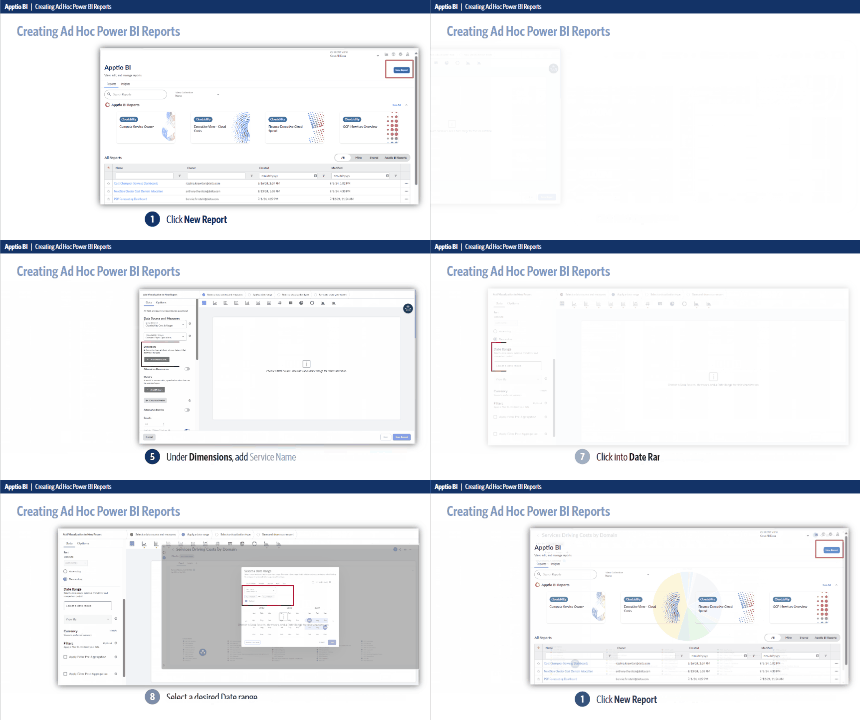
Creating Ad Hoc Power BI Reports: guided demonstration
Self-Service Group and Role Management
Compliance and access management training for Delta employees — built from direct system access and research, combining original Storyline development with scripted SME videos, closed captions, and a post-training reference strategy
Internal · Delta Air Lines Articulate Storyline Adobe Premiere Pro Narration scripting Closed captions
Audience
All Delta employees responsible for managing user access, creating security groups or distribution lists, or maintaining compliance with access governance policies — not limited to IT
Context
Developed in response to an InfoSec team request to support the release of a new access management system. Obtained direct system access to learn the tool firsthand and ensure accuracy beyond the provided documentation. Built contextual wrappers around SME-recorded videos, wrote narration scripts, and developed the full Storyline course including editing and embedding videos in Adobe Premiere Pro. Custom graphics developed in collaboration with lead designer.
Tools
Articulate Storyline · Adobe Premiere Pro · Adobe Creative Cloud · SAP SuccessFactors LMS
Learning objectives
  • Ensure compliance and governance by managing user access, ownership, and attestation of Delta's applications and data
  • Use the Self-Service Group Management tool to fulfill your role in the compliance and governance process through self-service access management
  • Use the Self-Service Group Management tool to create security groups, create policy-based rules for membership, and add group members
  • Use Self-Service Group Management to create distribution lists
  • Use Self-Service Role Management to modify roles and membership rules
Design decisions
The InfoSec team provided procedural documentation for 9 new features as the primary source material. To ensure accuracy and depth, direct access to the system was obtained and the tool was learned firsthand, bridging the gap between documentation and how the tool actually worked in practice. Rather than embedding SME-recorded videos as-is, contextual wrappers were built around each — covering foundational concepts like users, groups, roles, security group types, and policy-based structures — so learners had the framework to understand what they were watching before they watched it. Narration scripts were written for each video to shape how content was presented. Videos were edited in Adobe Premiere Pro and include closed captions to support accessibility and usability as reference resources. Progression is locked so learners must complete each section before advancing, ensuring engagement with the material. A References button provides links back to the source documentation throughout the course — and feedback on documentation errors was provided to the project team so the source material could be corrected for broader use. A post-training performance support strategy was built in from the start: videos were also published as standalone LMS resources to track where learners returned after training, and a quick reference document with links to each video was included at course end.
Self-Service Group and Role Management course welcome screen
Labeled graphic interaction on the Self-Service Group Management dashboard showing system markers
Key benefits animation: Automation, Scalability, Security, Efficiency, Compliance
Policy-based roles and policy-based security groups contextual content
Post-training video reference document with links to all demo videos
Course completion screen with PDF resource download and Mark Course Complete button
Avoiding Common Coding Vulnerabilities
OWASP security vulnerability awareness and prevention training for all Delta IT and engineering developers
Internal · Delta Air Lines Articulate Storyline Motion path animations SME narration Adobe Creative Cloud
Audience
All Delta IT and engineering developers · required course with 90% completion rate across IT
Context
Built from scratch at the request of the Infosec team to address top OWASP security vulnerabilities in custom developed code. Independent research was conducted across OWASP.org to ensure technical accuracy and depth. Part of the Strive for Five 2025 flagship learning program, rated 4.7/5 by 791 Delta IT employees and contractors.
Tools
Articulate Storyline · Adobe Creative Cloud · SAP SuccessFactors LMS
Learning objectives
  • Identify five common security vulnerabilities found in custom developed code and explain how each is introduced
  • Apply effective mitigation techniques to safeguard web applications against common vulnerabilities
Design decisions
Security content for developers risks landing as either too technical or too generic. The solution was a consistent instructional pattern across each vulnerability type: definition, potential impact, animation showing how the vulnerability is introduced, real code examples with fixes, and prevention strategy. Animations were not decorative. They made abstract attack vectors visible and concrete. An executive intro video from the head of Infosec established organizational stakes before the first lesson, and a 90% pass threshold on the final assessment ensured completion meant comprehension. The course was originally developed with text-to-voice narration, but the narration engine struggled with technical acronyms and security terminology. After exhausting available fixes, the script was provided to an InfoSec SME who recorded individual MP4 files for each slide. Each recording was then added to Storyline and synced to the timeline — more production work than text-to-voice, but cleaner and more credible for a security audience.
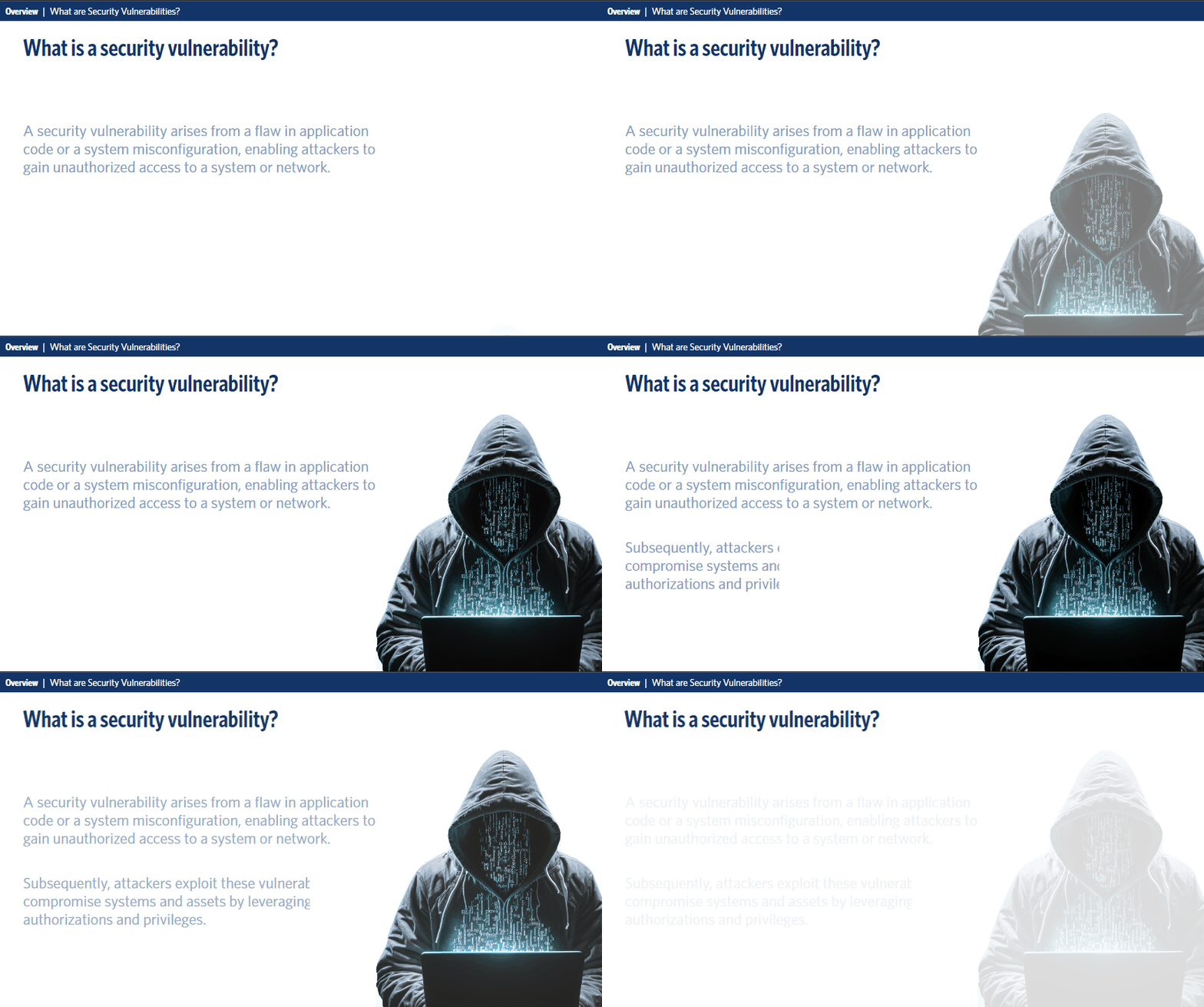
What is a security vulnerability: definition slide with animated text build
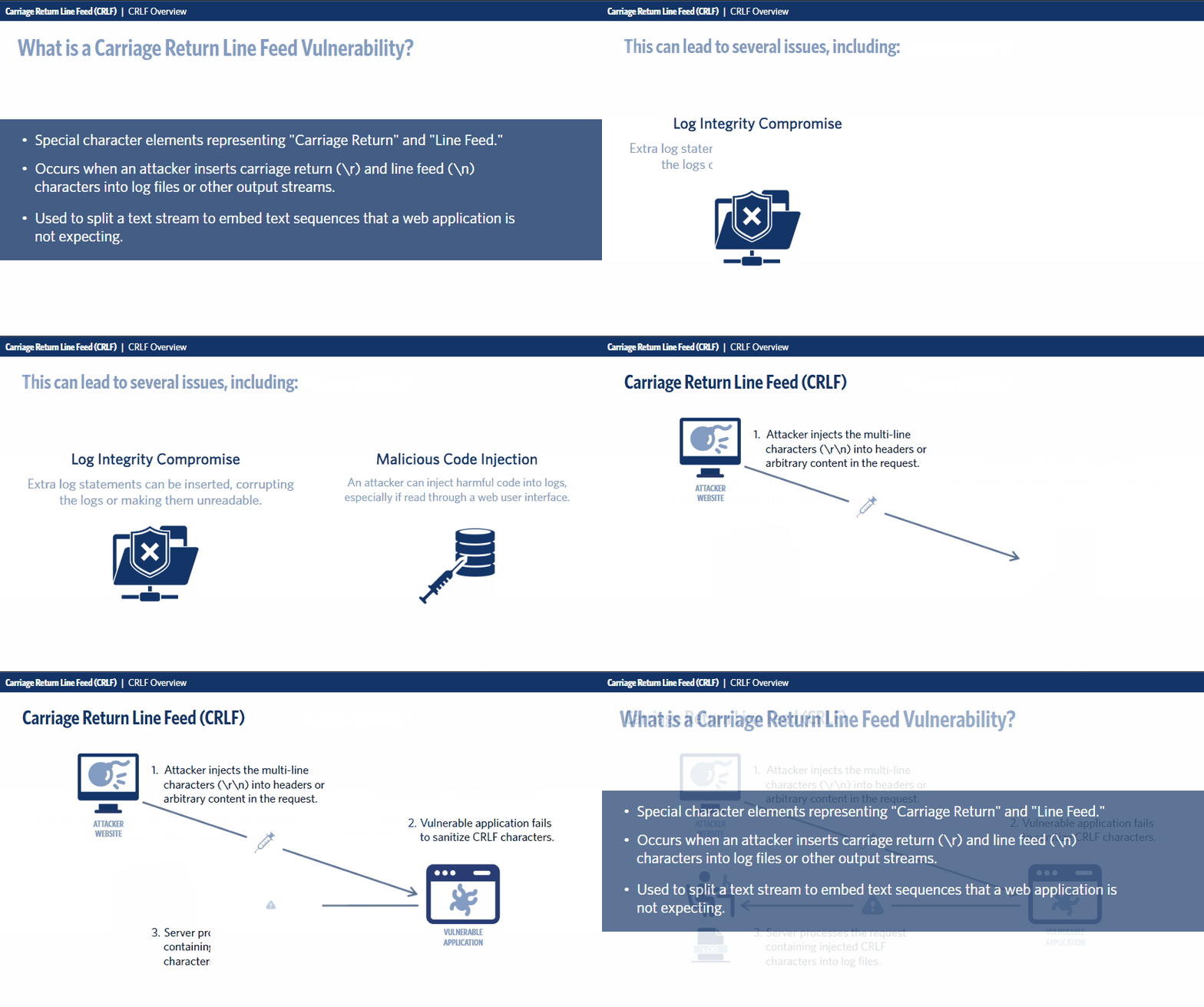
CRLF injection vulnerability overview animation
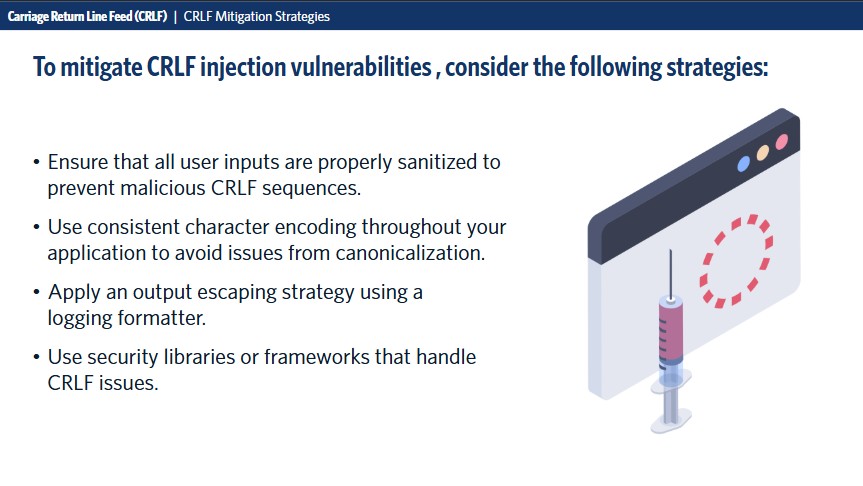
CRLF mitigation strategies slide with syringe graphic
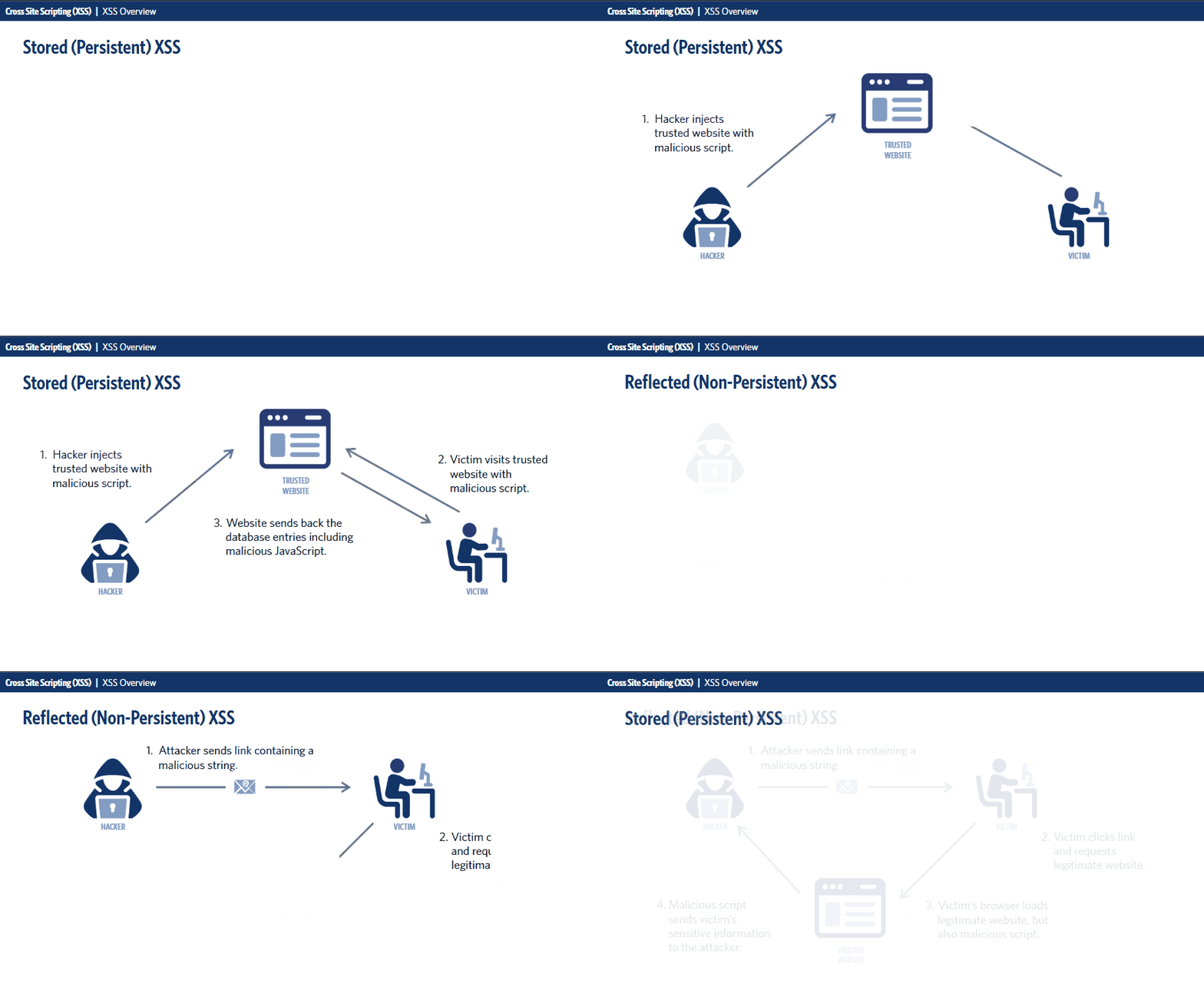
Stored XSS animation showing hacker, trusted website, and victim relationship
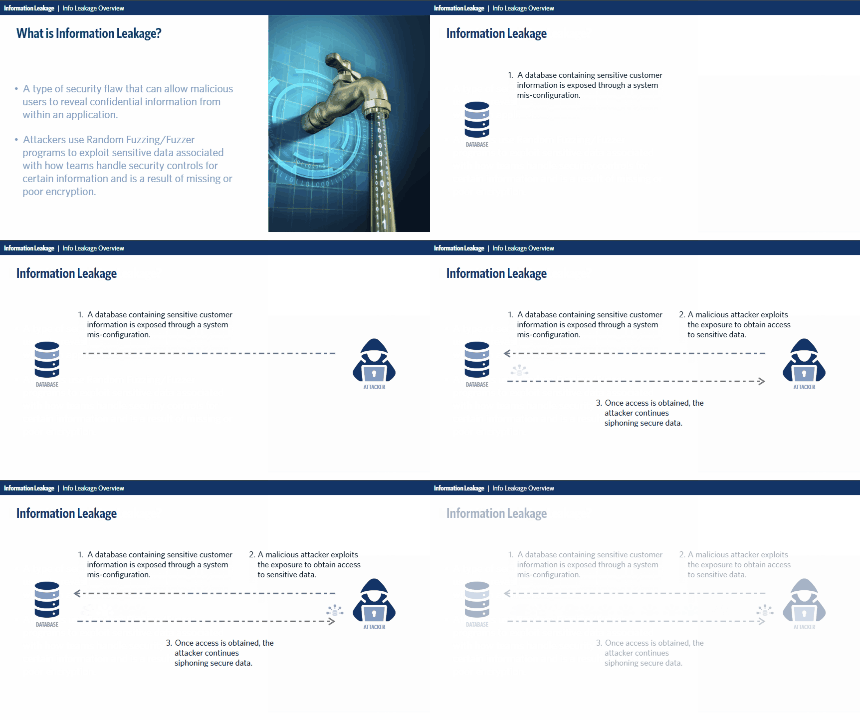
Information leakage overview with leaking tap graphic
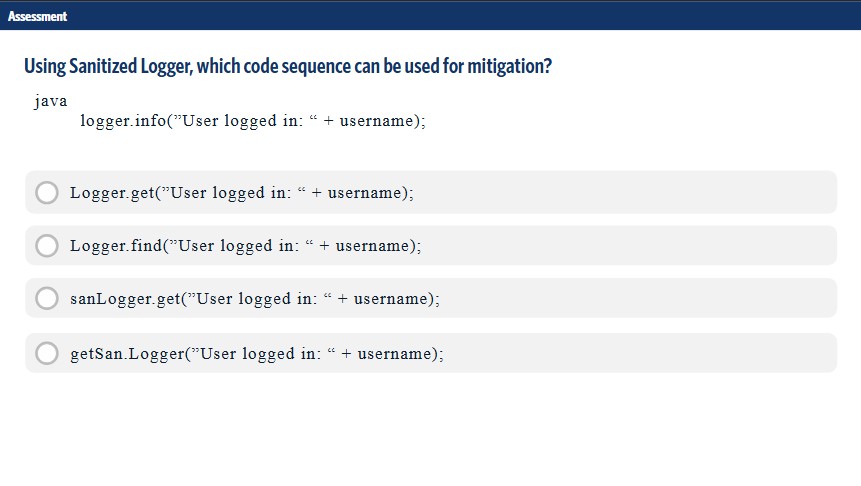
Assessment question: Using Sanitized Logger, which code sequence can be used for mitigation
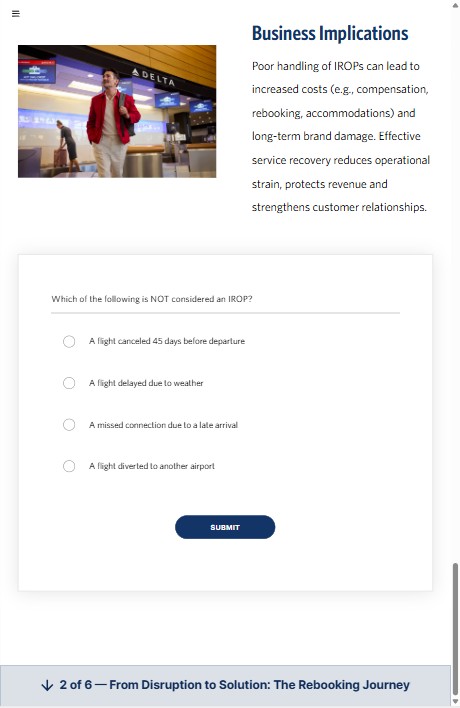
Service Recovery: Managing IROPs with VIPER-IROP Applications
Technical onboarding for engineers and product owners building Delta's flight disruption management applications
Internal · Delta Air Lines Articulate Rise Branching scenario Review 360 AI-assisted Adobe Creative Cloud
Audience
New engineers and product owners responsible for developing and maintaining VIPER-IROP flight disruption management applications
Context
Built to replace hours-long manual onboarding with a scalable self-paced alternative, proposed and designed to lead with customer empathy before technical content Content was developed through SharePoint research and multiple SME sessions, including a recorded onboarding session that was processed in Adobe Premiere Pro. A transcript of the recording was created and used — with AI assistance — to develop and refine the course outline. Approximately 13 reviewers provided feedback through Articulate Review 360 before finalization. Drafted directly in Rise without a formal storyboard, which is standard practice for Rise courses.
Tools
Articulate Rise · Adobe Creative Cloud · SAP SuccessFactors LMS
Learning objectives
  • Define Irregular Operations (IROP) and identify common causes and impacts on customers
  • Identify the VIPER applications used to rebook customers during an IROP
  • Explain the functionality and context architecture of each VIPER-IROP application
Design decisions
The original request was a technical onboarding course covering VIPER application capabilities. The course was redesigned to lead with the customer experience first. New engineers and product owners encounter a branching scenario as a disrupted passenger, navigating flight cancellation options, weighing tradeoffs, and feeling the friction. Only after building that empathy does the course move into system capabilities, application overviews, and reporting dashboards. The design decision was deliberate: people build better tools when they understand who depends on them.
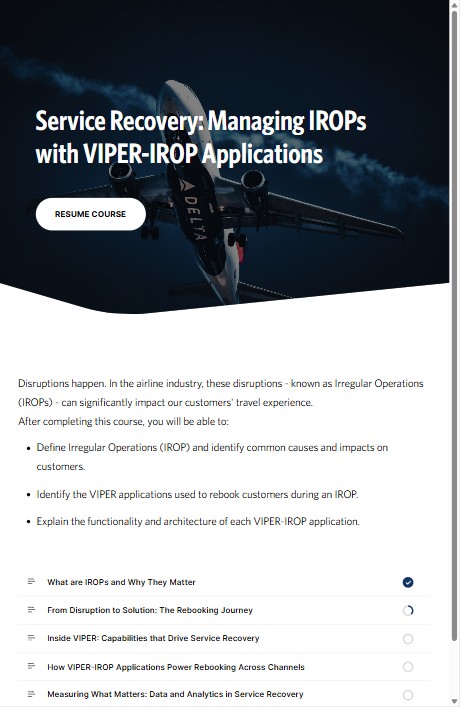
Service Recovery course start screen with Delta aircraft hero image
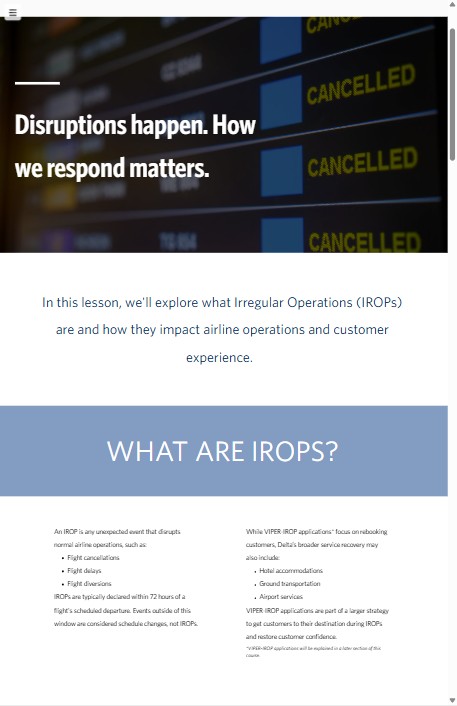
Lesson 1 overview: Disruptions happen. How we respond matters.
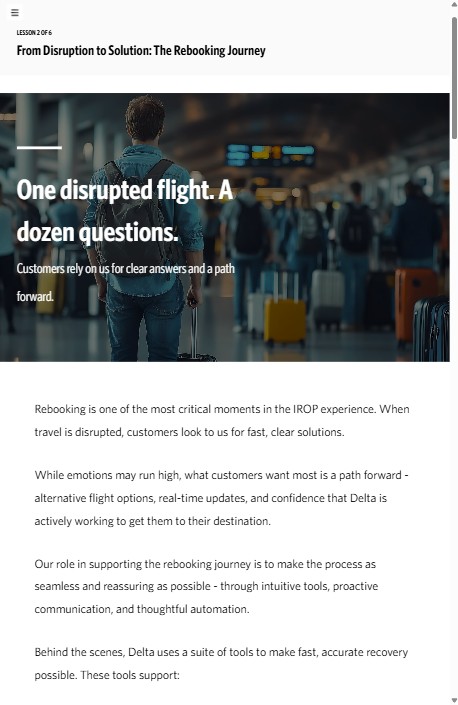
Lesson 2 overview: One disrupted flight. A dozen questions.
Process flow interaction showing key steps from disruption to rebooking
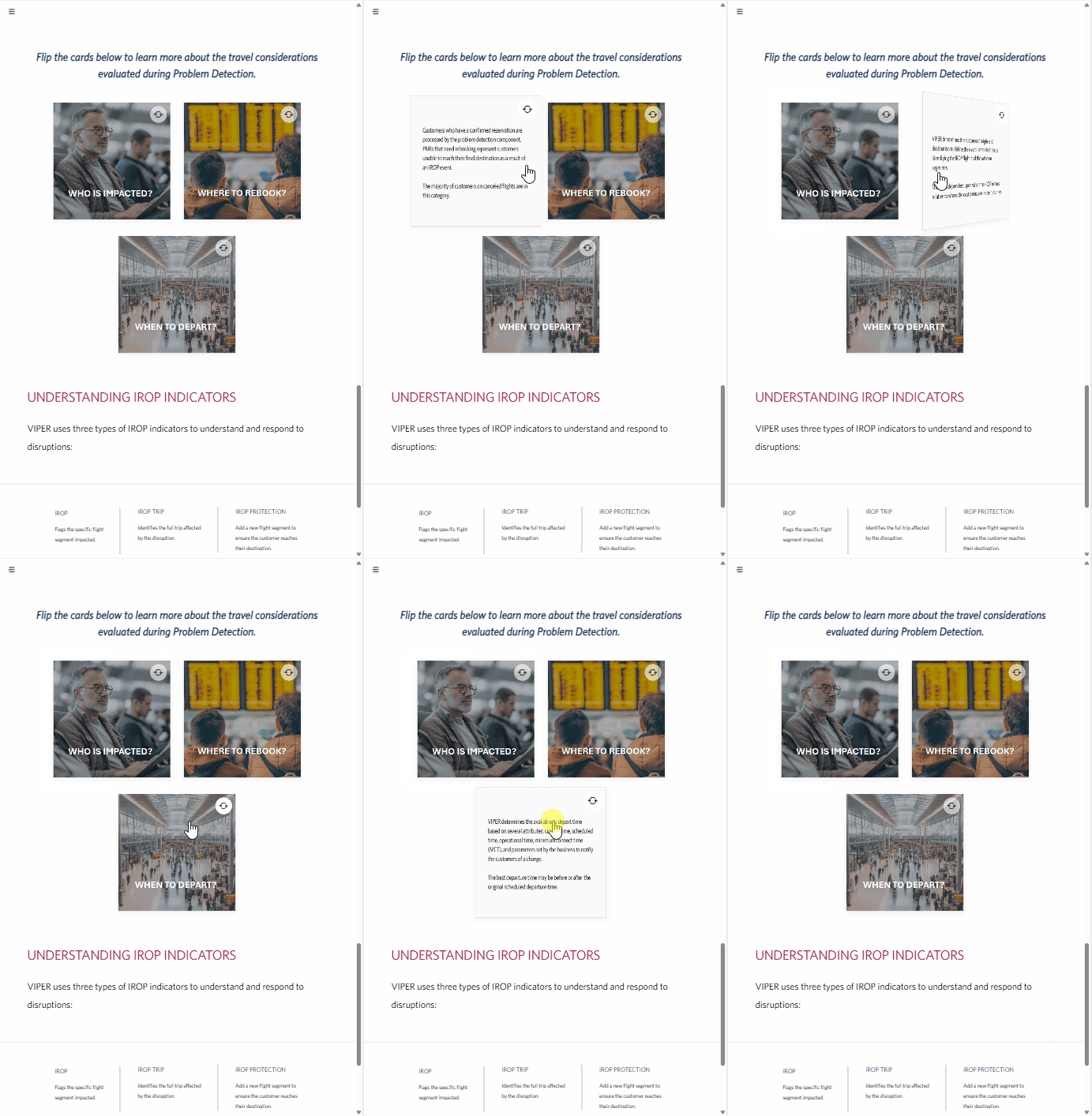
Flip card interaction showing travel considerations evaluated during Problem Detection
Branching scenario: Priya's rebooking decision
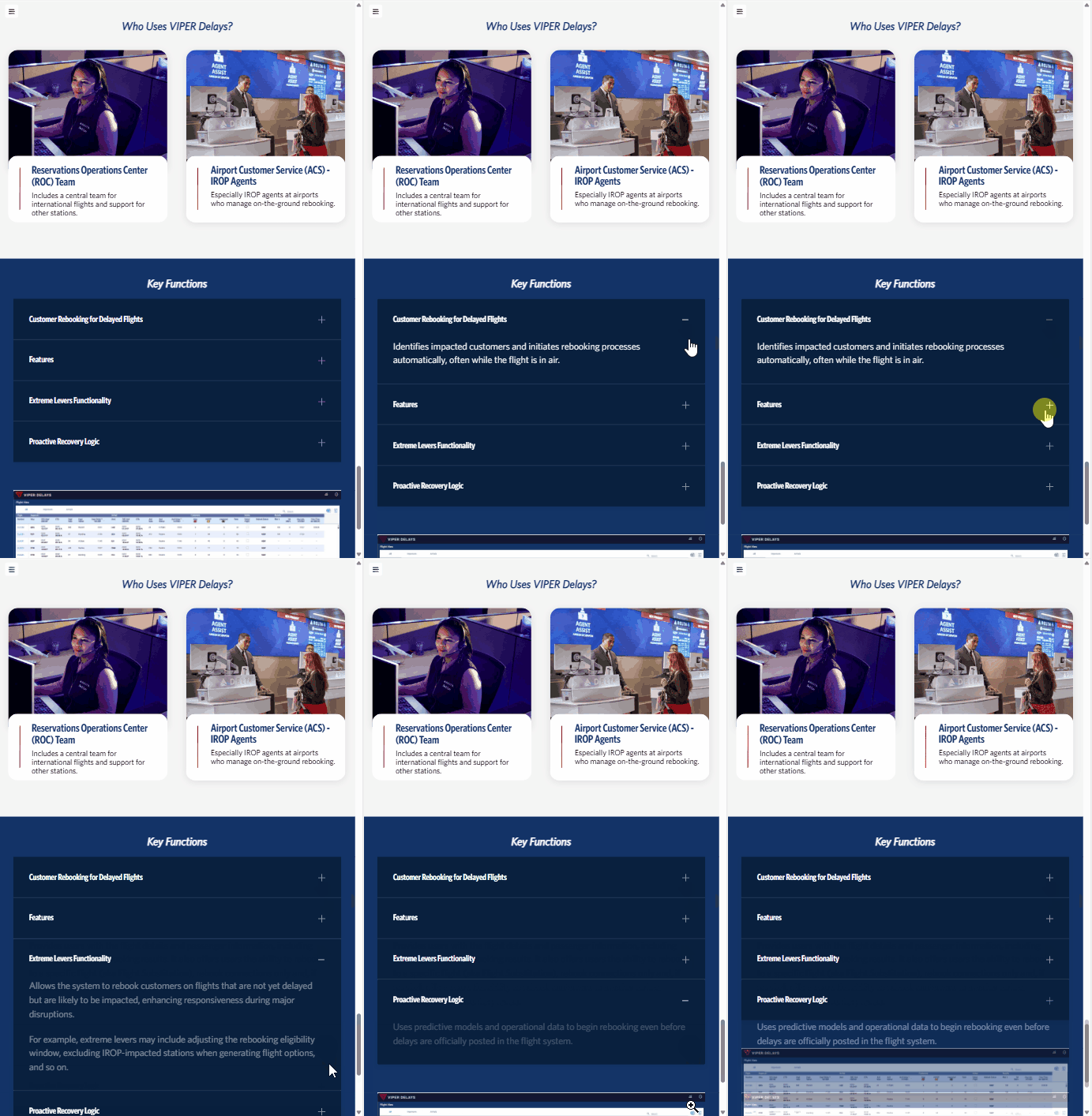
Accordion interaction showing VIPER application capabilities
Labeled graphic interaction showing VIPER system components
Knowledge check question: Which of the following is NOT considered an IROP
FinOps 101
Foundational cloud financial management literacy for Delta IT, redesigned from a dated, passive presentation into an engaging interactive course
Internal · Delta Air Lines Articulate Storyline Motion path animations Click and reveal Adobe Creative Cloud
Audience
Broad Delta IT audience seeking foundational FinOps literacy, including cost champions and engineering teams operating within cloud environments
Context
Redesign of an existing course, replacing outdated clip art and passive slide navigation with purposeful visual design and interactions matched to the learning objectives. Part of the Strive for Five 2025 flagship learning program serving Delta IT employees and contractors.
Tools
Articulate Storyline · Adobe Creative Cloud · SAP SuccessFactors LMS
Learning objectives
  • Define FinOps and its core purpose
  • Identify the key principles and personas associated with FinOps
  • Explain the structure and objectives of the Cost Champion Program
  • Analyze and apply strategies to optimize cloud spending
  • Execute the stages of the FinOps lifecycle effectively
Design decisions
The previous version of this course was visually dated: clip art, no design system, passive slide-through delivery. The redesign addressed both problems simultaneously, a clean visual treatment that established credibility, and interactions chosen to match how each concept is best understood. Principles were brought to life through motion path animations that show relationships and sequence rather than describing them in text. Personas were built as layered click-and-reveal interactions so learners could explore at their own pace rather than consuming a wall of information at once. The goal was a course that felt current and respected the learner's time.
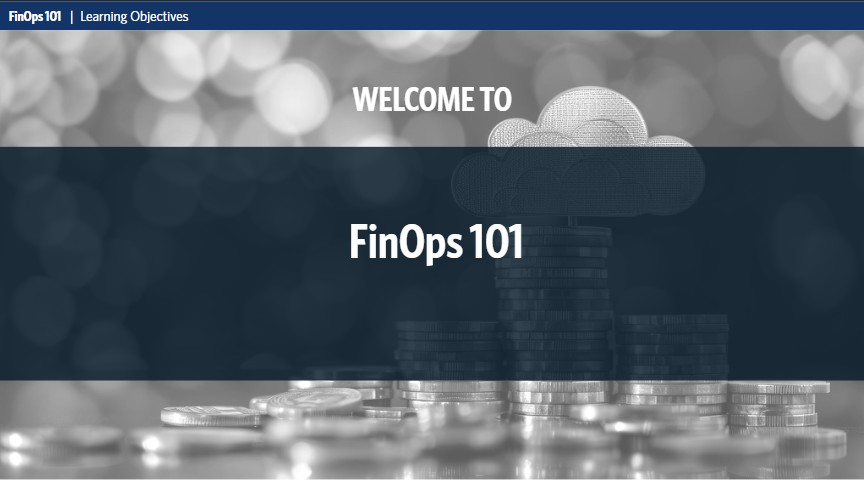
FinOps 101 welcome screen showing course title and visual design
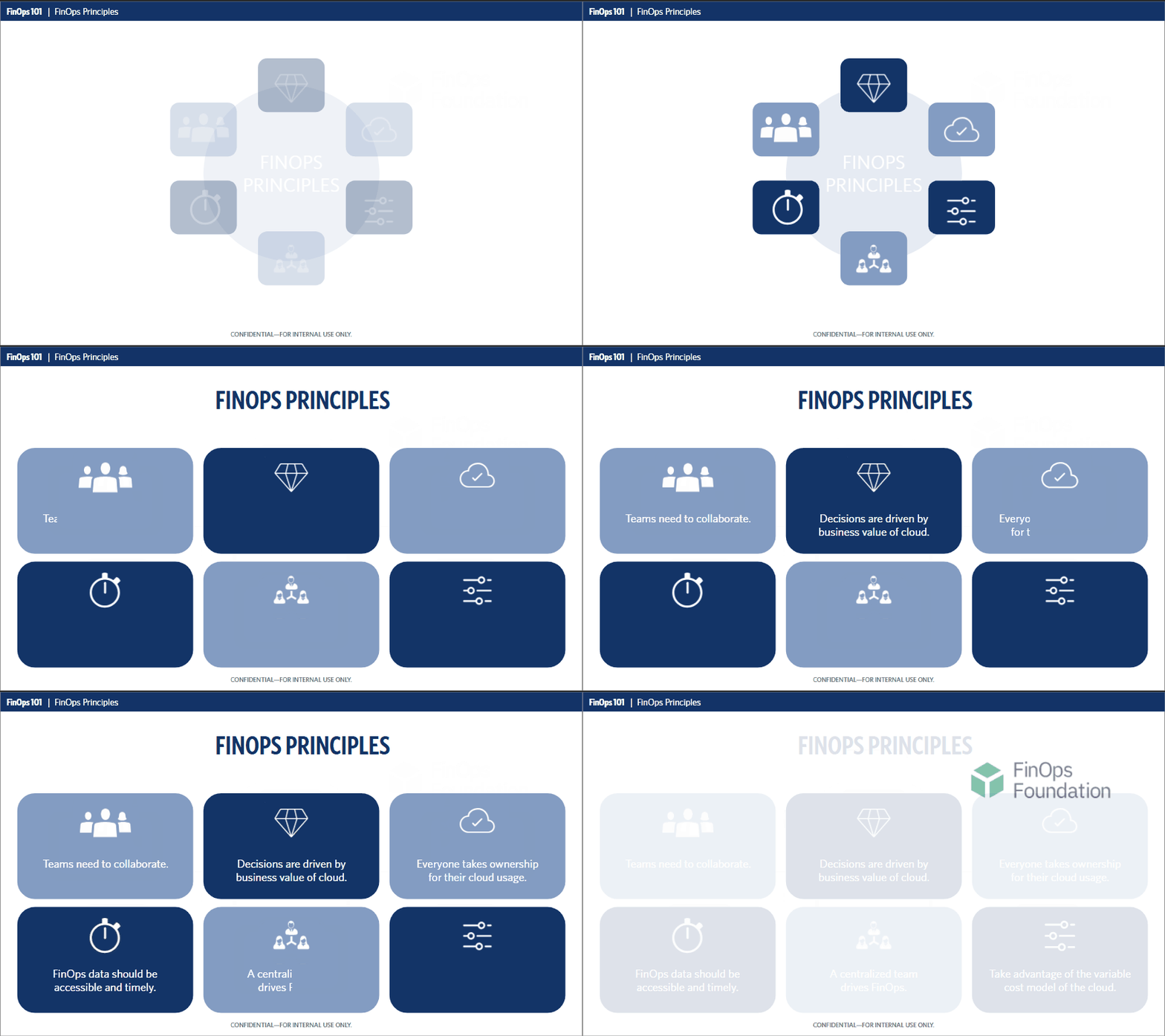
FinOps Principles motion path animation
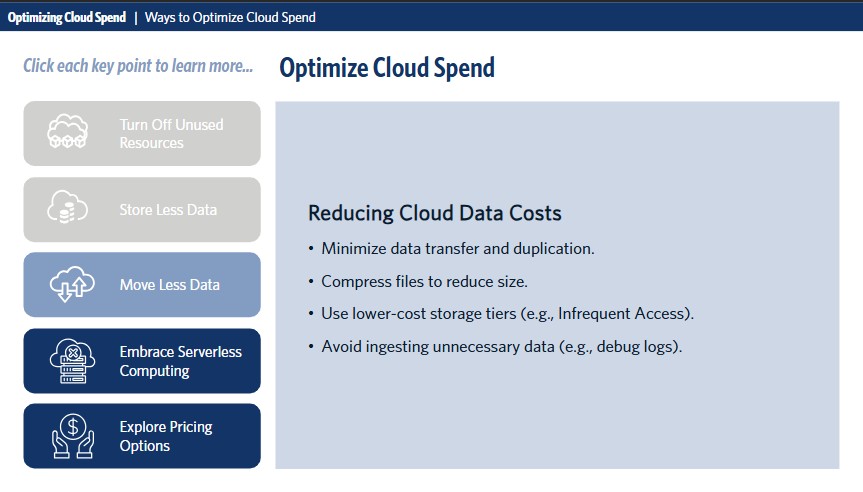
Layers and states click and reveal interaction showing cloud spend optimization options
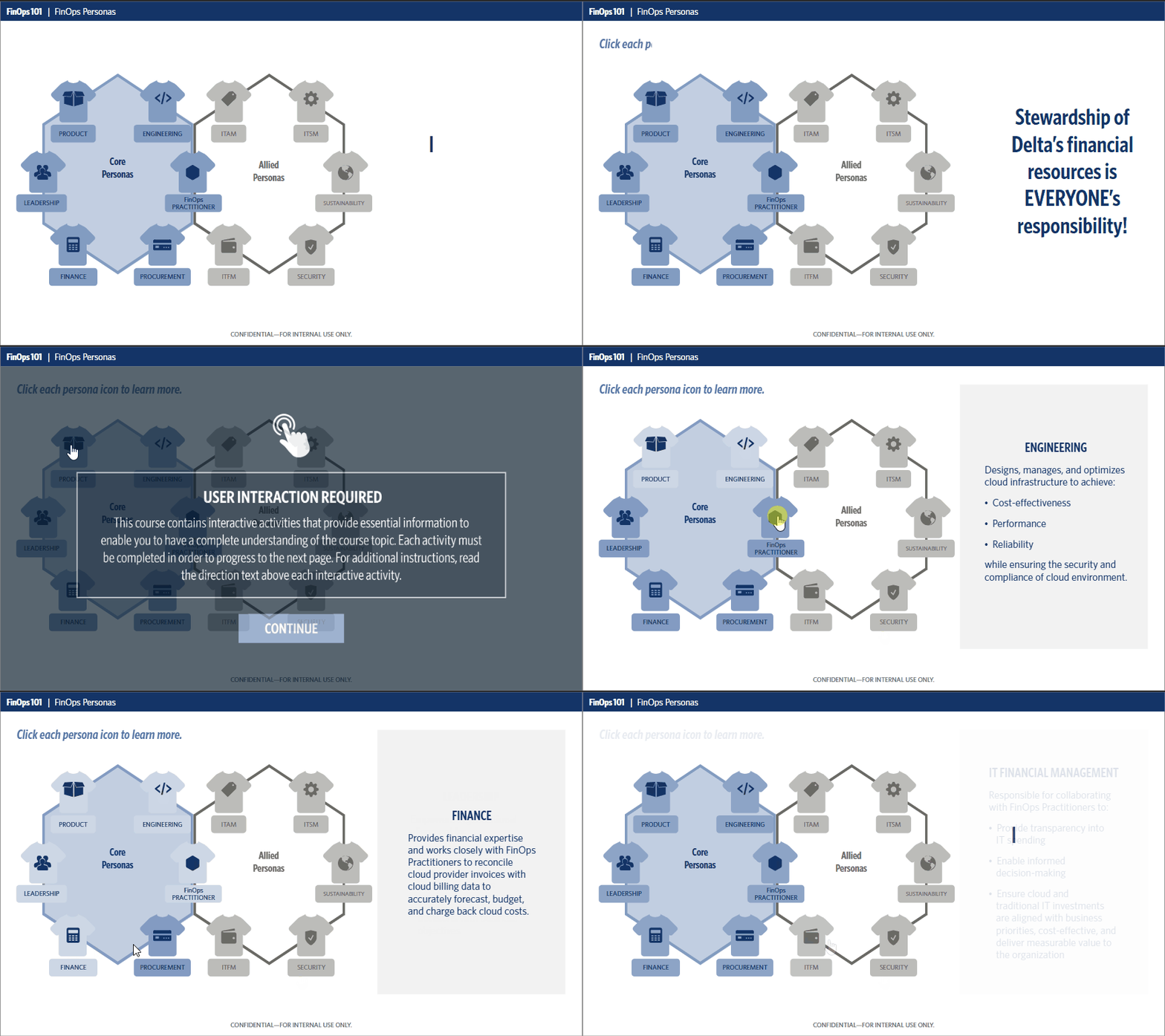
FinOps Personas diagram showing Core and Allied Personas
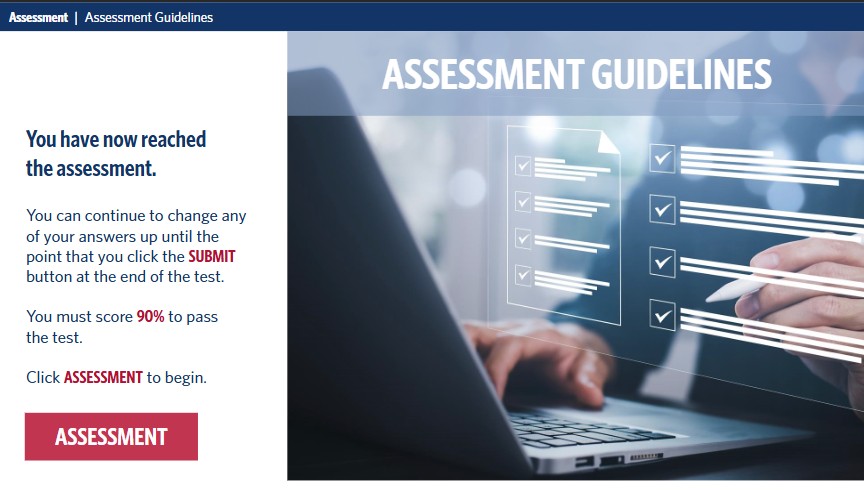
Assessment guidelines slide showing 90% pass requirement
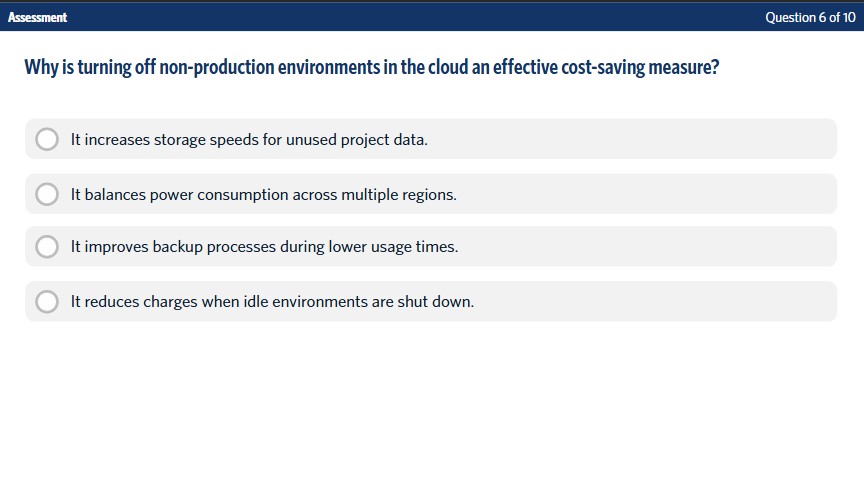
Assessment question example showing answer design
Introduction to Developer Experience (DX)
Technical onboarding for Delta IT developers covering the software development lifecycle, development environment setup, and essential tooling
Internal · Delta Air Lines Articulate Storyline Narration scripting Adobe Creative Cloud Collaborative project
Audience
New and existing Delta IT developers needing foundational knowledge of Delta's development environment, tools, and practices
Context
Collaborative project: led content strategy, research, narration scripting, and storyboarding from a high-level SME outline. Built initial course framework including lessons, navigation, and interactions in Storyline. Visual design and custom graphics completed by lead designer. Part of the Strive for Five 2024 flagship learning program.
Tools
Articulate Storyline · Narration scripting · Audio sync · Adobe Creative Cloud · SAP SuccessFactors LMS
Learning objectives
  • Analyze the software development lifecycle, evaluate setup prerequisites, choose essential development tools, and proficiently use them
  • Evaluate and apply practical knowledge of common Delta IT practices, demonstrating the ability to support and value their effective contribution to software development projects
Design decisions
The SME provided a high-level bullet outline as the starting point. Translating that into a complete storyboard required independent research across Delta's ZAP portal and technical documentation, the source of truth for development practices. Rather than scheduling additional SME time for content already documented, the approach was to go directly to primary sources, synthesize the content, and validate through the approval process. The initial Storyline build established the course architecture: lessons, navigation triggers, and a suite of click-and-reveal interactions presented across multiple formats including split screen, process flow, and labeled graphics. Content appears progressively on screen in sync with narration, requiring significant timeline work to orchestrate text, graphics, and audio into a cohesive experience. The lead designer elevated the visual design and contributed custom graphics and icons, a collaboration that demonstrated the impact purposeful visual decisions have on learner engagement.
Importance of Developer Experience: three pillars: faster cycles, higher quality, more innovation
Software Development Life Cycle diagram showing six phases: Plan, Design, Develop, Test, Deploy, Monitor
Planning Phase Overview: benefits of proper planning with team photography
Path to Production Process: guided click-through of planning step
Principles of Software Design animation building from central circle
7 Key Principles of Software Design click and reveal interaction
Strategic Planner
Product training for a workforce planning application, built around a fictional company to ground complex configuration in real business context
Customer · Verint Systems Articulate Rise Storyline blocks Camtasia iStock
Audience
Verint customers using Strategic Planner for long-term workforce planning across call center and work queue environments
Context
Part of the 60-course COVID conversion, built from product documentation and trainer-recorded demos without direct SME support
Tools
Articulate Rise · Storyline embedded blocks · Camtasia · iStock · Cornerstone LMS
Learning objectives
  • Configure Strategic Planner scenarios including work queues, staffing profiles, and cost models
  • Apply volume and AHT forecasting to model long-term hiring, training, and attrition needs
  • Interpret staffing and performance outputs to support workforce planning decisions
Design decisions
Rather than walking learners through product features in isolation, the course was built around a fictional company, a Frisbee disk manufacturer, giving every configuration decision a business context and a reason. Product knowledge was self-acquired from documentation and trainer-recorded demos, then translated into learner-facing content without SME dependency. Rise's full interaction toolkit was used throughout: process blocks, accordions, flashcards, sorting activities, labeled graphics, and embedded Storyline animations, keeping a complex workforce planning product engaging across its full scope. Photography was sourced and edited using Adobe Creative Cloud. Video editing and production were handled personally in Camtasia.
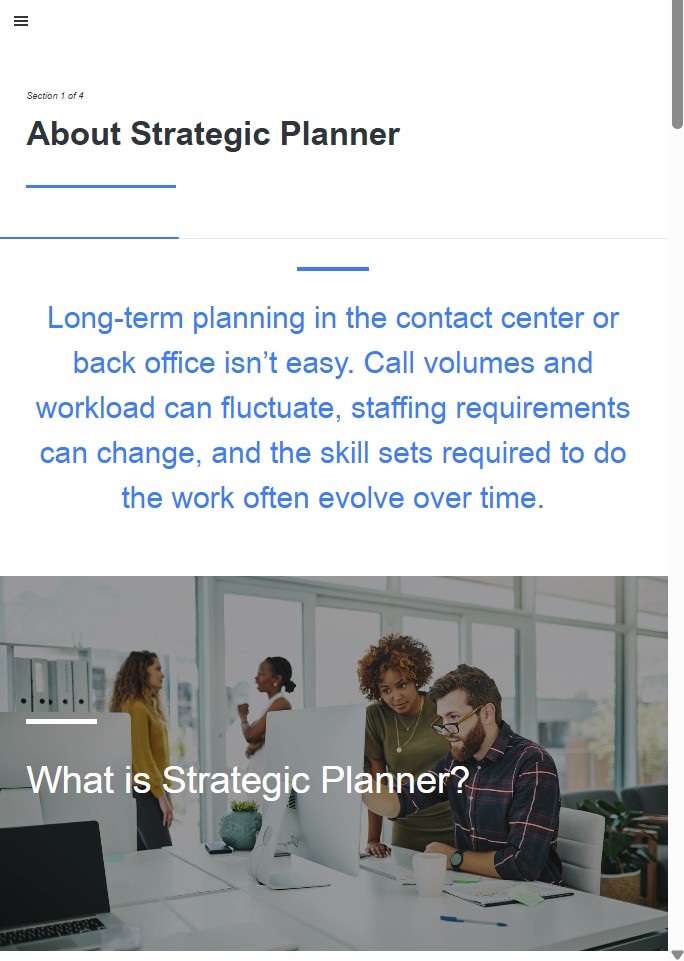
About Strategic Planner course introduction
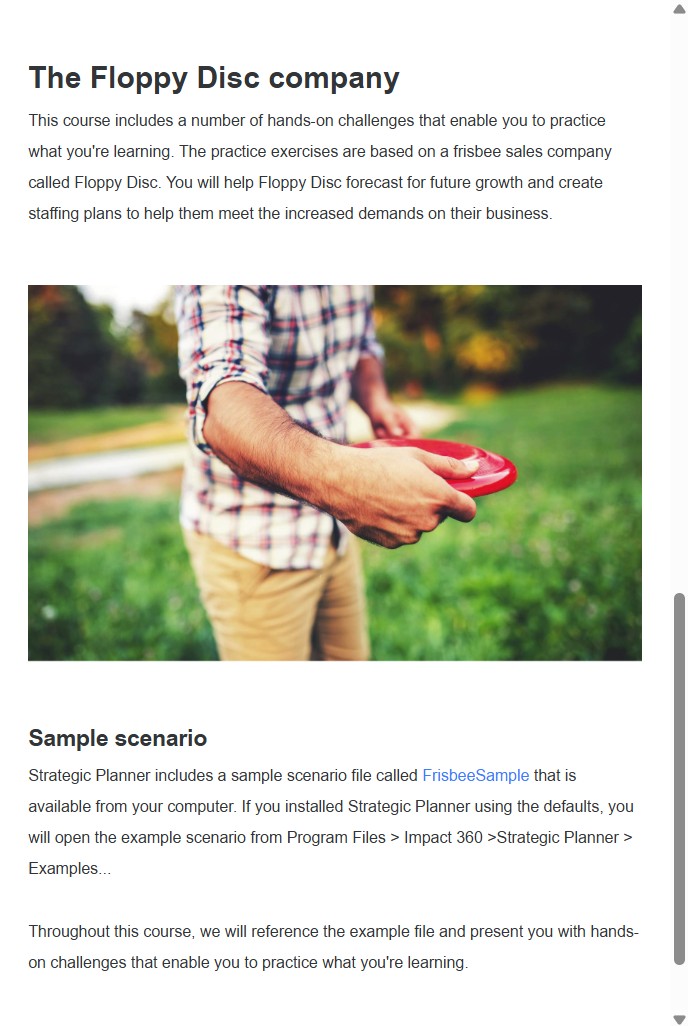
The Floppy Disc company fictional scenario introduction
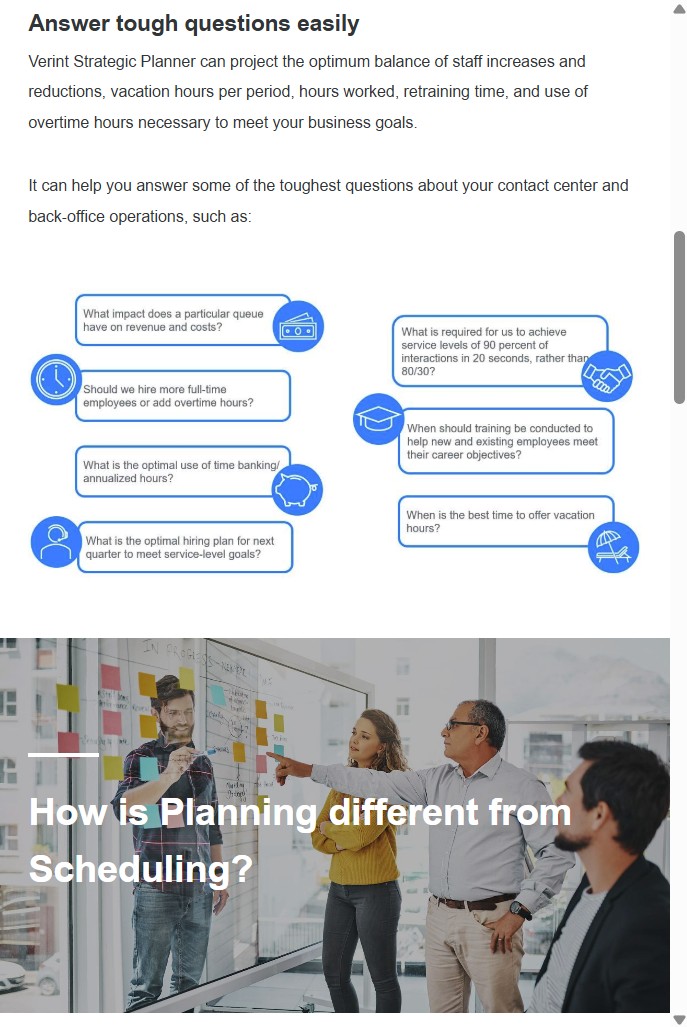
Answer tough questions easily: Strategic Planner product overview
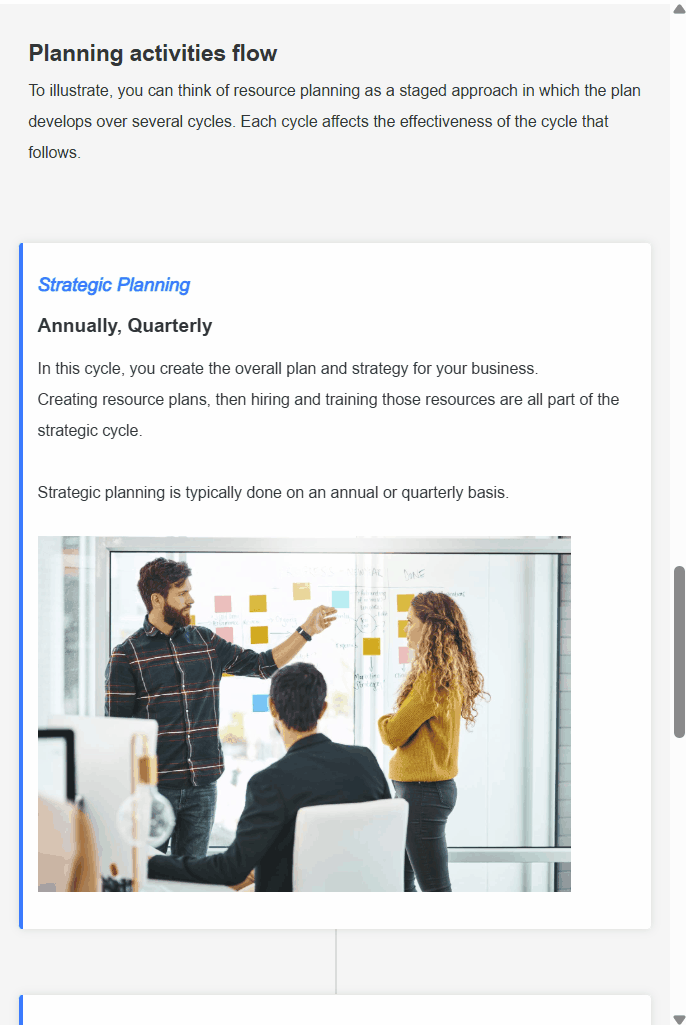
Planning activities flow process interaction
Strategic Planner workflow sequence interaction
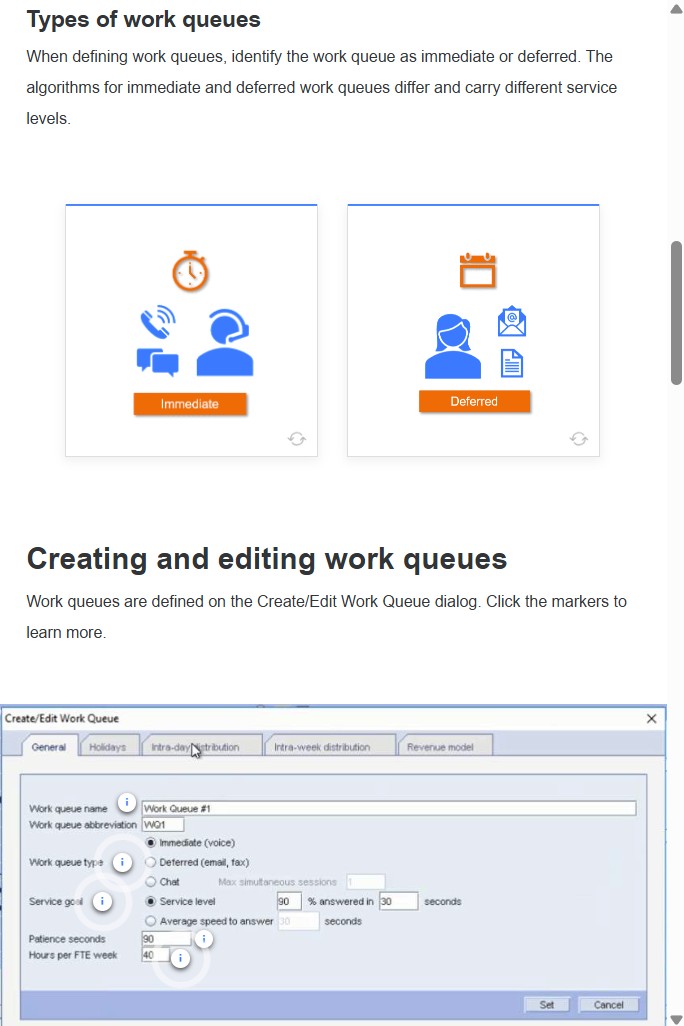
What are Work Queues: section overview with headset imagery
Work queue types flip card showing Immediate and Deferred options
Work queues demonstration video and hands-on challenge
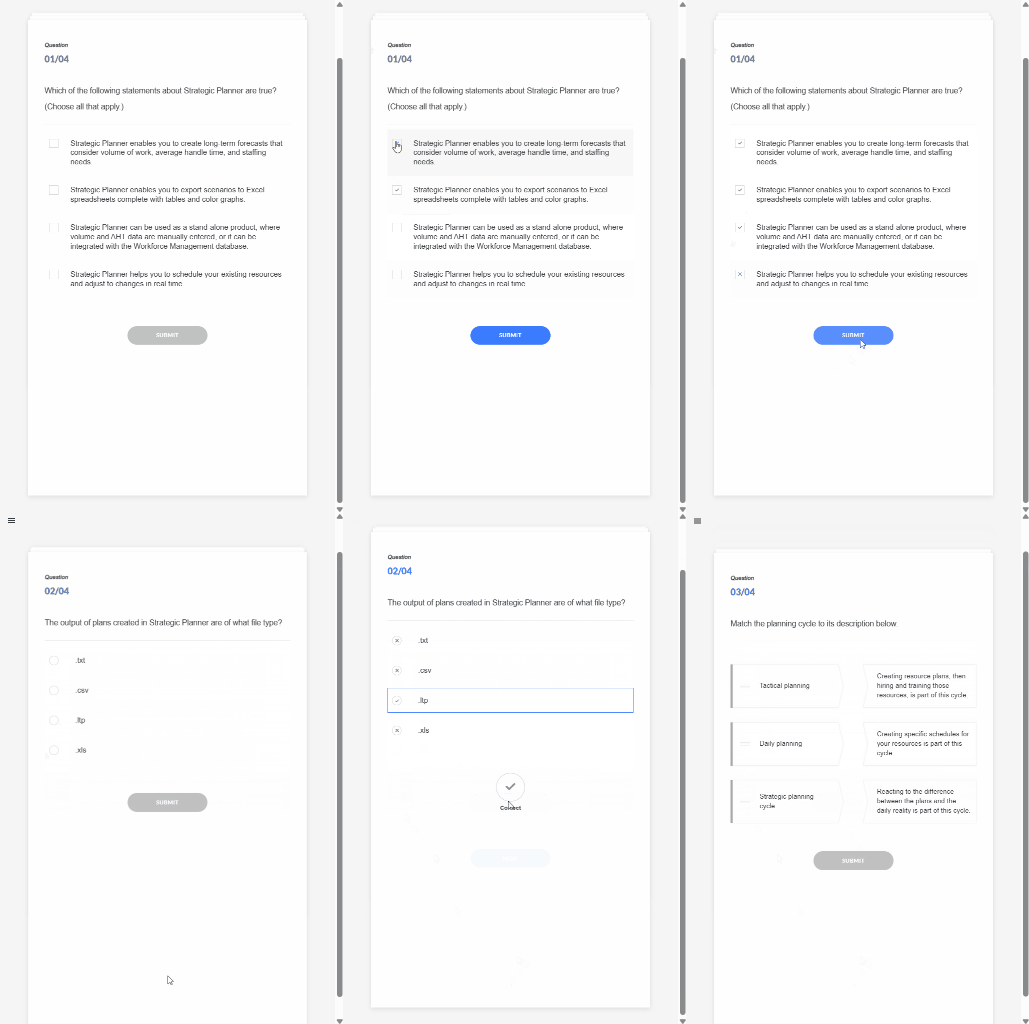
Assessment question: Which statements about Strategic Planner are true
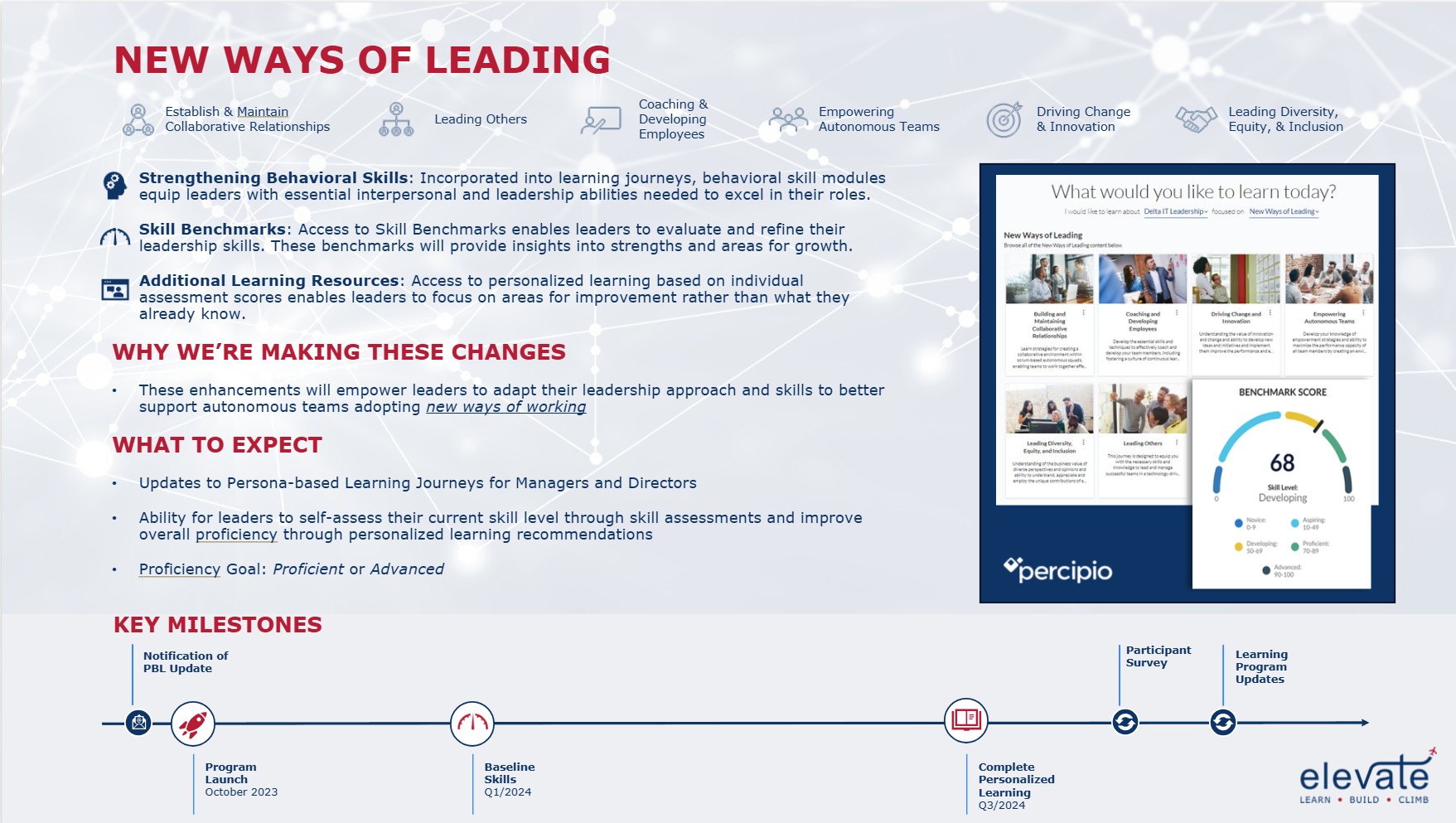
New Ways of Leading
Competency-based leadership development program for Delta IT managers and directors, with six learning journeys built and live in Percipio, with a blended cohort design
Internal · Delta Air Lines Program Design Percipio Blended Learning Leadership Development
Audience
Delta IT managers and directors responsible for leading engineering teams in an agile, cloud-first environment
Context
Designed as a leadership development program contextualized for Delta IT, reflecting the realities of leading engineering teams including squad-based structures, OKRs, and cross-functional collaboration. Six competency journeys fully implemented and live in Percipio.
Tools
Percipio (Skillsoft) · Skill Benchmarks · Microsoft Teams
Learning objectives
  • Embrace a servant leadership mindset and apply it to drive success in technology leadership roles
  • Foster a culture of collaboration, trust, and continuous improvement within teams
  • Coach and develop team members and foster a culture of continuous learning
  • Empower autonomous teams while maintaining organizational alignment
  • Apply design thinking and systems thinking principles in technology leadership contexts
  • Champion diversity, equity, and inclusion as a leadership practice
Design decisions
This program was designed to meet busy IT leaders where they were: autonomous, skeptical of mandatory training, and operating in a squad-based agile environment. Rather than generic leadership content, every competency was contextualized to Delta IT realities: OKRs, cloud-first engineering, cross-functional collaboration. The architecture blended self-paced Percipio journeys with facilitated vILT sessions and reflection activities, structured as a cohort experience so leaders could build shared language and peer accountability alongside their content knowledge. Skill benchmarks replaced completion certificates as the measure of success. Leaders track proficiency progression from Developing toward Proficient or Advanced, focusing on gaps rather than content they already know. Six journeys are fully implemented and live in Percipio.
New Ways of Leading program overview with Percipio mockup and milestone timeline
New Ways of Leading Learn Build Climb architecture showing six competencies with pre and post benchmarks
Building and Maintaining Collaborative Relationships journey live in Percipio
New Ways of Leading program design document preview
View full document
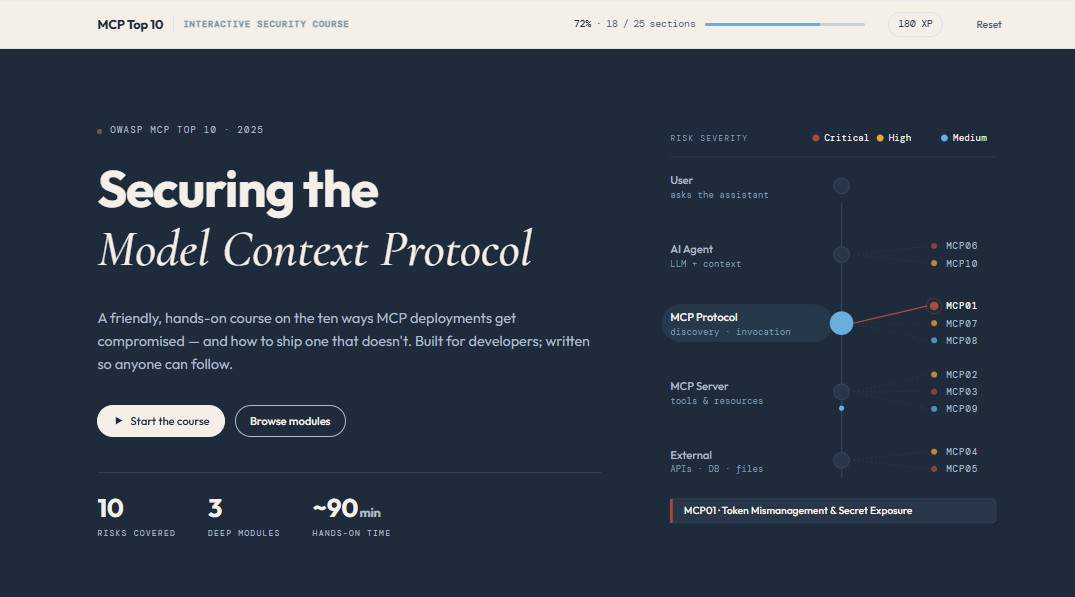
Securing the Model Context Protocol
A developer-focused security course built in Claude Design — OWASP MCP Top 10 threats, live attack simulators, code comparisons, and embedded quizzes, fully prototyped in under 15 minutes
Developer audience Claude Design (Anthropic) Rapid prototyping Security awareness Interactive HTML
Audience
Software developers and engineers building AI-integrated applications with Model Context Protocol (MCP) — particularly those embedding AI agents into production workflows
Context
A personal portfolio prototype built entirely in Claude Design (Anthropic, 2026). The OWASP MCP Top 10 framework was released in early 2025 as MCP adoption accelerated — a timely topic with no existing training coverage. Starting with a structured prompt, three fully developed modules plus seven placeholder modules were produced in roughly 15 minutes, including animated flows, interactive attack simulators, side-by-side code comparisons, knowledge checks with engineered distractors, and real-world case studies. Iterative prompting resolved accessibility and instructional issues.
Tools
Claude Design · React · Iterative AI-assisted design · OWASP MCP Top 10 source material
Learning objectives
  • Identify the OWASP MCP Top 10 threat categories and explain how each creates exploitable risk in AI-integrated systems
  • Distinguish secure from insecure implementation patterns using code-level examples and apply mitigations to real development decisions
  • Recognize active attack patterns in context using live simulators, and evaluate defensive configurations by switching between vulnerable and protected system states
What this demonstrates
Rapid prototyping speed using generative AI tools · Instructional design judgment in an emerging, undocumented subject area · Ability to write effective design prompts that produce high-quality, learner-centered output · Iterative refinement of AI-generated content for accessibility and pedagogical quality
Design decisions
This prototype was built to explore what Claude Design could produce with a well-constructed prompt and a developer learner in mind. The dark theme, monospace typography, and terminal-style UI were deliberate signals to the audience — developers respond to environments that look like their tools. Attack simulators were included not for novelty but because passive description of security threats rarely transfers; learners needed to trigger failures themselves and observe the consequences in real time. The side-by-side code diff format was chosen over prose explanations for the same reason: developers read code faster than they read descriptions of it. Knowledge checks used engineered distractors — wrong answers that reflected real misconceptions rather than obvious filler. Iterative prompting addressed two issues from the initial output: dark-on-dark text failing accessibility contrast minimums, and security analogies that assumed non-technical literacy the audience didn't need. The final export is a standalone HTML file with no external dependencies.
Launch course prototype
05 · Capabilities

What I
bring

Strategy & Design
  • Learning architecture and ecosystem design
  • Domain-based skill framework development
  • Needs analysis and gap identification
  • Modular and reusable content design
  • Content strategy for new implementations and existing user upgrades
Development & Tools
  • Articulate Rise and Storyline
  • Narration scripting and audio sync (Storyline)
  • Udemy Business, Pluralsight, Percipio
  • Video production (Camtasia, Adobe Premiere Pro)
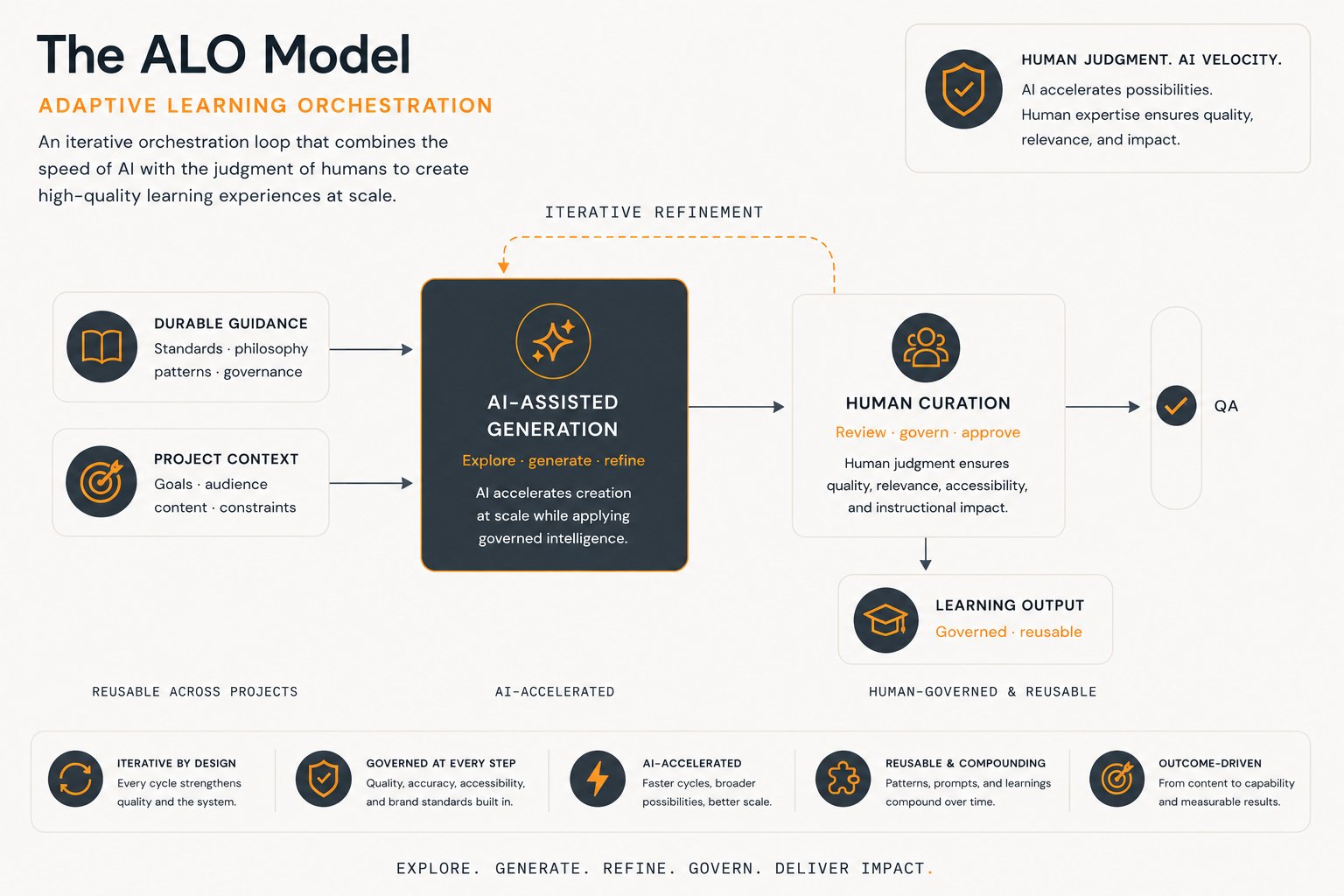
  • AI-augmented content development
  • Pendo (in-app guidance and digital adoption)
  • Project and content management (Confluence, Jira, Agility)
Measurement & Ops
  • Diagnostic, formative, and summative assessment design
  • Confidence, readiness, and intent measurement
  • Kirkpatrick L1-L4 measurement
  • Learning analytics and reporting (Power BI)
  • Virtual enablement design including intake framework, pre/post confidence and readiness measurement, and behavior change tracking
Enterprise Operations
  • LMS vendor evaluation, selection, and implementation
  • In-app guidance vendor evaluation (Pendo, WalkMe, Whatfix)
  • Learning platform administration: Udemy, Pluralsight, Percipio, Cornerstone, SuccessFactors, AWS Skill Builder, Pearson VUE
  • Business case development and executive presentation
  • Direct report management and team leadership
Let's work together

Ready to build
something that lasts?

Available for full-time roles and select consulting engagements in learning strategy and technical enablement.

dan.wensel@outlook.com